Supporting Your Child With Diabetes Through the Holidays: A Parent's Guide to Food, Treats & Celebrations

The school party sign-up hits your inbox at 4:47 p.m., the cookie exchange is Saturday, and your child has already asked whether diabetes means they have to skip dessert. Spoiler: it does not. But it does mean the holidays could use a little more planning than "we'll figure it out when we get there."
For families managing Type 1 diabetes, the season brings late dinners, mystery casseroles, candy bowls, classroom treats, and relatives who mean well but sometimes have a lot to say about sugar. Your child deserves the magic of the holidays, not a front-row seat to everyone discussing their blood sugar. Here is how to keep the celebrations fun and the diabetes care practical.
First, the most important rule: diabetes does not cancel dessert
Children with Type 1 diabetes can generally enjoy cookies, pie, cocoa, and other holiday favorites. The goal is to account for carbohydrates and follow their individualized insulin plan - not create a list of "good" foods and "bad" foods. Type 1 diabetes is an autoimmune condition; eating sugar did not cause it. And while food choices affect glucose levels, they are not a measure of how "good" your child has been.
If your family is still learning the basics, start with our guide to recognizing Type 1 diabetes in kids. For a child already diagnosed, their pediatric diabetes team's carb ratios, glucose targets, correction instructions, and sick-day plan should guide every decision below.
1. Have a food plan that leaves room for actual fun
Carbs count. The cookie is not the villain.
Carbohydrates are in more than desserts: rolls, mashed potatoes, stuffing, fruit, milk, and sauces all contribute. Read labels when available; for homemade foods, use a carb-counting guide and your best reasonable estimate. Fat-heavy holiday meals may also delay glucose rises, so follow your care team's guidance about monitoring and insulin timing rather than improvising extra doses.
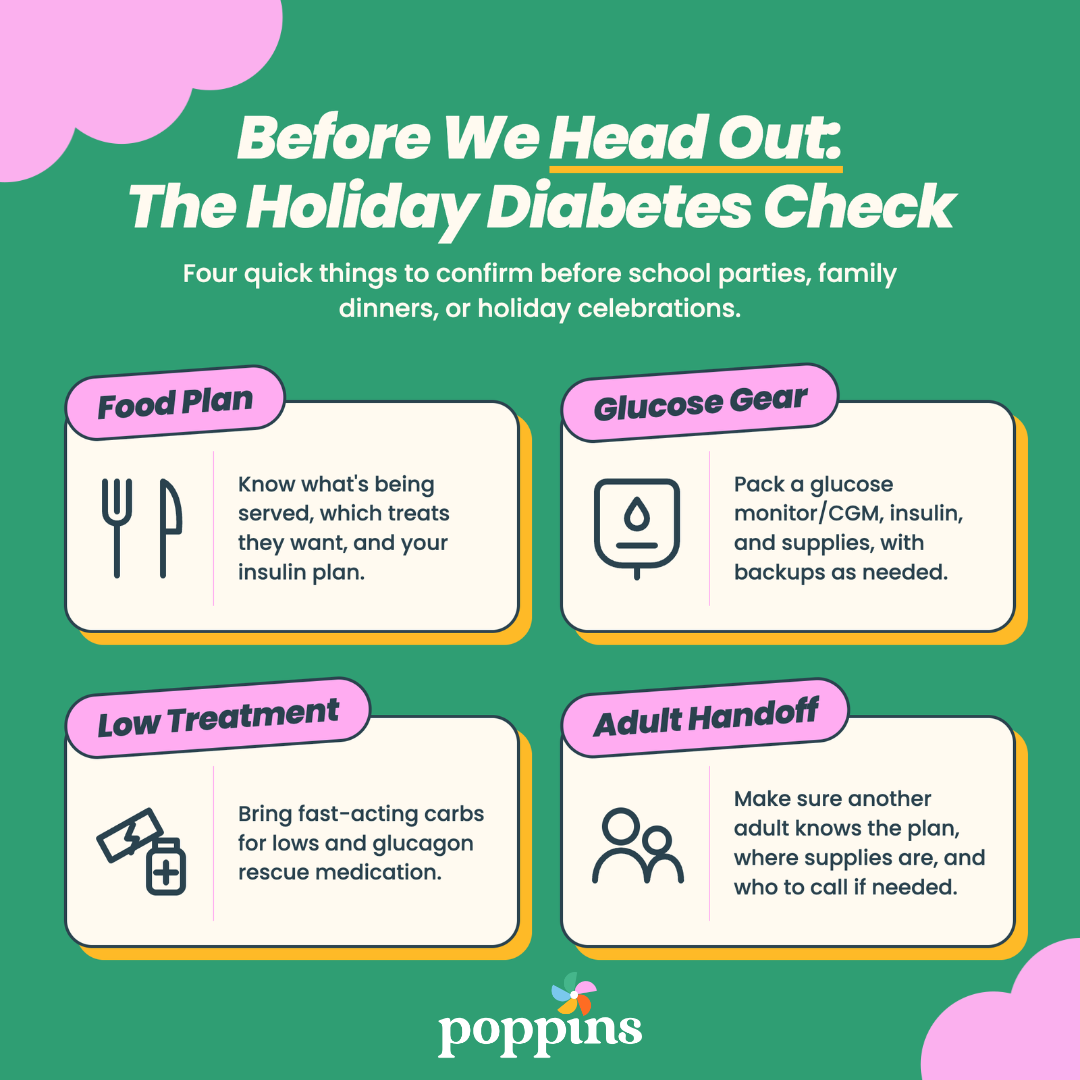
The five-minute pre-party plan: check what food may be served, decide which treats your child actually wants, review their usual insulin approach with the adult supervising, and make sure the right supplies are packed. Do not skip earlier meals to "save carbs" for a big dinner. A predictable breakfast and lunch make the evening easier.
Make the plate familiar - even if the menu is not.
At a family dinner, let your child pick foods they like. Balance is helpful, but it does not need to look like a textbook diagram. A serving of turkey, a favorite side, vegetables if they want them, and dessert can fit the plan. For little kids who eat three bites and declare themselves full, use your diabetes team's instructions for uncertain appetite and insulin timing.
2. Make classroom parties and holiday events less of a guessing game
A 10-minute message now can save a string of frantic calls during the holiday concert. Ask the teacher or host what is being served, when the party starts, and who will help your child with glucose checks, insulin, and low blood sugar treatment. For school events, make sure your child's diabetes medical management plan or applicable care plan covers classroom treats and staff responsibilities.
You do not need to volunteer to bake a separate "diabetes dessert" every time. Many children would rather have the same cookie as everyone else, with appropriate planning. If the food is a surprise, ask for a photo of the package or nutrition label - or a heads-up about portions. Keep communication private and matter-of-fact rather than making your child's plate a group project.
Poppins pediatric nurse practitioner Alyson Insull puts it this way: "The goal isn't to make every holiday treat predictable. It's to have a simple plan so your child can participate without feeling like diabetes is the main event."
3. Pack the small kit that prevents the big disruption
Holiday plans run late. A ten-minute stop becomes a 90-minute line to see Santa. Before leaving, check that your child has the diabetes essentials recommended by their care team, and that an adult knows where they are.
- Glucose monitor and strips if used, plus CGM supplies or backup monitoring method.
- Insulin and delivery supplies, with backup equipment as appropriate; protect insulin from freezing or extreme heat.
- Fast-acting carbohydrates for lows, separate from ordinary snacks, and prescribed glucagon rescue medication.
- Water, an easy-to-count snack, and ketone-testing supplies if included in the child's plan.
- A charged phone or receiver, emergency contacts, and written instructions for another caregiver.
If you are traveling or staying overnight, pack extra supplies in a bag you can reach - not in luggage you may not see until bedtime. Keep extra medications and travel supplies within reach, especially if you are flying.
4. Make a plan for the moments that go sideways
If glucose goes low
Follow your child's prescribed hypoglycemia plan immediately. Keep fast-acting sugar available, recheck glucose as instructed, and remember that a child with severe symptoms - such as seizure, unconsciousness, or inability to swallow safely - needs emergency glucagon as prescribed and emergency medical services. Never give food or drink by mouth to someone who cannot swallow safely.
If glucose runs high - or your child gets sick
Use the individualized correction and ketone-checking instructions from your child's diabetes team. A higher reading after a long holiday meal is information, not a reason to shame your child. Do not skip basal insulin or guess at extra insulin doses. Illness, missed insulin, persistent high glucose, or vomiting can raise concern for diabetic ketoacidosis (DKA). Contact the diabetes team promptly according to the care plan; seek emergency care for vomiting concerning ketones, deep or rapid breathing, fruity breath, confusion, unusual sleepiness, or signs of significant dehydration. A child with suspected DKA needs urgent in-person evaluation, not a holiday "wait and see."
5. Prepare the grown-ups - not just the glucose supplies
Some relatives will ask thoughtful questions. Others will announce, across the dining room, "Can you even eat that?" Your child should not have to defend their dessert while everyone else is opening presents. A calm line often works: "Yes, they can enjoy holiday foods. We handle the diabetes side with their care plan." Then change the subject.
For younger kids, agree on a discreet signal when they want help. For older kids and teens, ask what support feels useful versus embarrassing. They may want to manage the carb count themselves, or they may want you to handle it quietly. Independence grows with practice and the right level of adult backup - not a public performance review at the buffet.
Also, preserve non-food traditions. Let your child choose the movie, lead the decorating, or deliver the gifts. The holiday is not supposed to revolve around a blood glucose graph.
6. Give every caregiver a three-sentence handoff
If someone else is hosting or supervising, do not send a 14-paragraph text at 8:02 a.m. Give them the specific care instructions from your child's diabetes team, and confirm that they are trained to carry them out. A useful handoff answers three questions: When and how do we check glucose? What do we do if it is low or high? Who do we call if the plan is not working?
For a sleepover, trip, or event without a trained adult, coordinate with your child's diabetes team before the day arrives. No party is worth relying on a caregiver who has never been shown how to respond to a serious low.
What if your child is newly diagnosed this holiday season?
Keep the first holiday simple. Pick the traditions that matter most, ask the diabetes team about your trickiest meal or event, and practice one new skill at a time. You do not need to become a human carbohydrate database by Thanksgiving. You need a usable plan, a backup, and people who know their role.
If the holidays are bringing up anxiety, food battles, or worries about your child feeling different, support can matter as much as another spreadsheet. A Poppins certified parent coach can help your family work through these parenting challenges, from conversations about food to helping your child feel included. Your child's diabetes team should continue to direct insulin management and diabetes-specific care.
TL;DR: Holidays with diabetes can still be holidays
Yes to treats: Most children with Type 1 diabetes can enjoy holiday foods with carbohydrate counting and their individualized insulin plan.
Plan the handoffs: Tell teachers, hosts, and caregivers what they need to know before the party starts.
Pack for surprises: Bring glucose supplies, rapid treatment for lows, prescribed rescue medication, and backups.
Handle highs and lows without blame: Follow the diabetes care plan, including sick-day and ketone instructions.
Protect the fun: Your child is more than a blood sugar reading - or the cookie on their plate.
The real win is not a perfect glucose line on a holiday. It is a child who feels included and a family that knows what to do next. Which upcoming celebration could feel easier with a five-minute plan made today?
Holidays can bring a few extra challenges, but you don't have to navigate them alone. Whether you have a medical question about your child's health or need help managing food-related stress, family expectations, or the emotional side of diabetes, Poppins is here to help. Our pediatric medical team can provide guidance on health concerns, while our certified parent coaches can help you navigate the behavioral and emotional challenges that come with parenting a child with diabetes. Your child's diabetes team remains the primary resource for insulin adjustments and diabetes-specific management.