Impetigo in Kids: What Those Honey-Colored Crusts Really Mean (and When It's Time for Treatment)

You finally get everyone home, dinner is halfway made, someone still needs help with spelling words, and that's when you notice what looks suspiciously like dried honey around your child's nose.
Great.
Another thing to Google after bedtime.
If you've spotted red sores, yellow crusting, or blisters on your child's skin, impetigo may be the culprit. The good news? It's common and very treatable. The less-good news? It spreads with impressive efficiency. Like glitter, once it gets into the house, everyone suddenly seems involved.
Here's what parents need to know about impetigo, including what it looks like, when to seek care, and how to keep it from becoming a household group project.
What Is Impetigo?
Impetigo is one of the most common skin infections in children, especially those between ages 2 and 5. It happens when bacteria enter through tiny breaks in the skin, which is why it often appears after bug bites, eczema flare-ups, runny noses, or playground scrapes.
Because it's highly contagious, it spreads easily through:
- Skin-to-skin contact
- Scratching and then touching another area of the body
- Shared towels, washcloths, bedding, and clothing
Children with eczema are especially prone to impetigo because their skin barrier is already working overtime.
What Does Impetigo Look Like?
Most parents aren't searching "non-bullous impetigo." They're searching "yellow crust around nose child."
And honestly, that's exactly what impetigo often looks like.
Common signs include:
- Small red sores
- Honey-colored crusts
- Oozing or weeping skin
- Spots around the nose and mouth (though they can occur anywhere)
- Mild itching or discomfort
Parents are often surprised by how quickly a few spots can multiply after a night of scratching. As Poppins Pediatric Nurse Practitioner Lisa Braunwell explains, "Impetigo has a way of looking small at first. Especially in kids with eczema or sensitive skin, what starts as one spot can spread quickly with scratching, which is why we like to recognize it early and start treatment when needed."
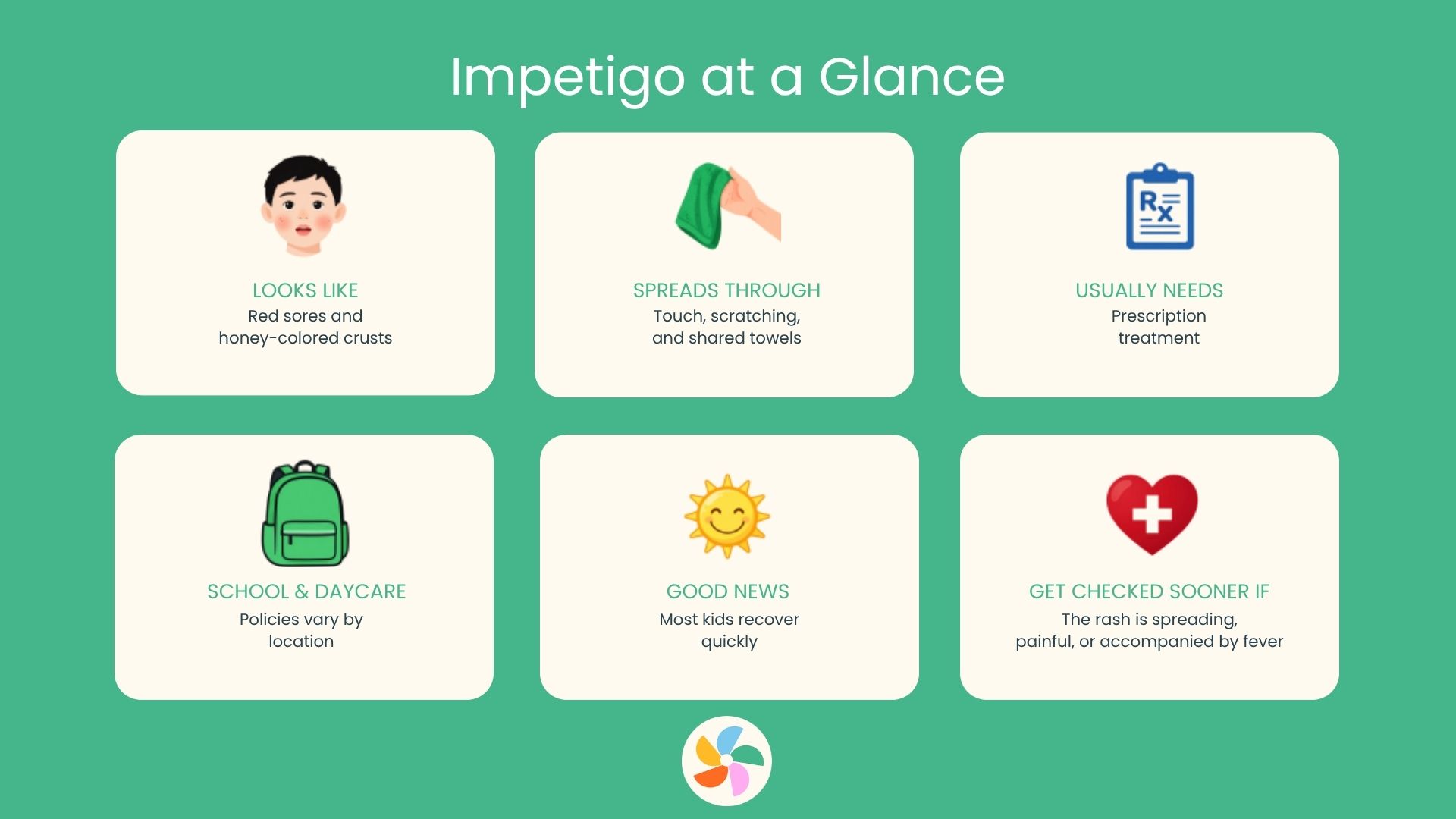
If you only remember a few things about impetigo, make it these.
Can I Treat Impetigo at Home?
This is where things get a little nuanced.
Home care can help keep things from getting worse, but impetigo itself usually requires prescription treatment to fully clear and prevent spreading.
While you're arranging an evaluation, it can help to:
- Gently wash the area with soap and water.
- Avoid scratching.
- Keep fingernails short.
- Use separate towels and washcloths.
- Wash pillowcases and clothing that come into contact with the rash.
No need to sanitize your entire house. This isn't a bleach-every-surface situation.
Is This Something I Need Seen Tonight?
Sometimes the answer is obvious.
Other times, it's bedtime and you're trying to decide whether this is a "send a message and deal with it in the morning" problem or a "guess we're changing tomorrow's plans" problem.
It's usually reasonable to wait until the next day if your child is acting normally, there are only a few spots, and the rash isn't rapidly spreading.
More urgent evaluation is warranted if the rash is spreading quickly, becoming painful, associated with fever, or your child simply seems unwell.
Is Impetigo Contagious?
Very.
Impetigo spreads easily among siblings, daycare classmates, and teammates. The good news is you don't need to turn your house into an operating room.
A few simple measures go a long way:
- Wash hands regularly.
- Avoid sharing towels and washcloths.
- Keep fingernails trimmed.
- Wash clothing and bedding that have come into contact with the affected area.
Fortunately, a few extra loads of laundry are usually enough.
When Can My Child Go Back to School or Daycare?
For many parents, this is the question behind all the other questions.
Most children can return to school or daycare once treatment has been started and they're no longer considered highly contagious, though individual policies vary. Check with your child's school or daycare for their specific requirements.
The Bottom Line
Impetigo may look alarming, but it's one of the most common skin infections we see in kids—and thankfully, it's very treatable.
Those honey-colored crusts are often a sign that bacteria have taken advantage of irritated skin. Good hygiene helps, but most cases need prescription treatment to fully clear and limit spread.
The silver lining? Most kids are back to their normal selves long before you've finished washing all the extra towels.
TL;DR
Impetigo is a common and contagious skin infection that causes red sores and honey-colored crusts. While gentle skin care can help, most children need prescription treatment. The good news? Kids typically recover quickly and are back to their usual selves before long.
If those spots looked worse tomorrow morning, would you feel confident knowing what your next step would be?
If not, Poppins is here to help. Connect with a Poppins medical provider for guidance whenever childhood illnesses throw an unexpected wrench into your plans.