Ear Piercing Care for Kids: What’s Normal, What’s Not, and What to Actually Do About It

You said yes. Your kid finally has earrings, and now you’re squinting at a little crusty bit near the post wondering if something is wrong. It’s probably fine — but here’s what you actually need to know.
The vast majority of piercing issues are minor and manageable at home. The key is knowing what normal healing looks like, what a real problem looks like, and what to do about each. That’s what this article covers.
What to Expect Right After Getting Pierced
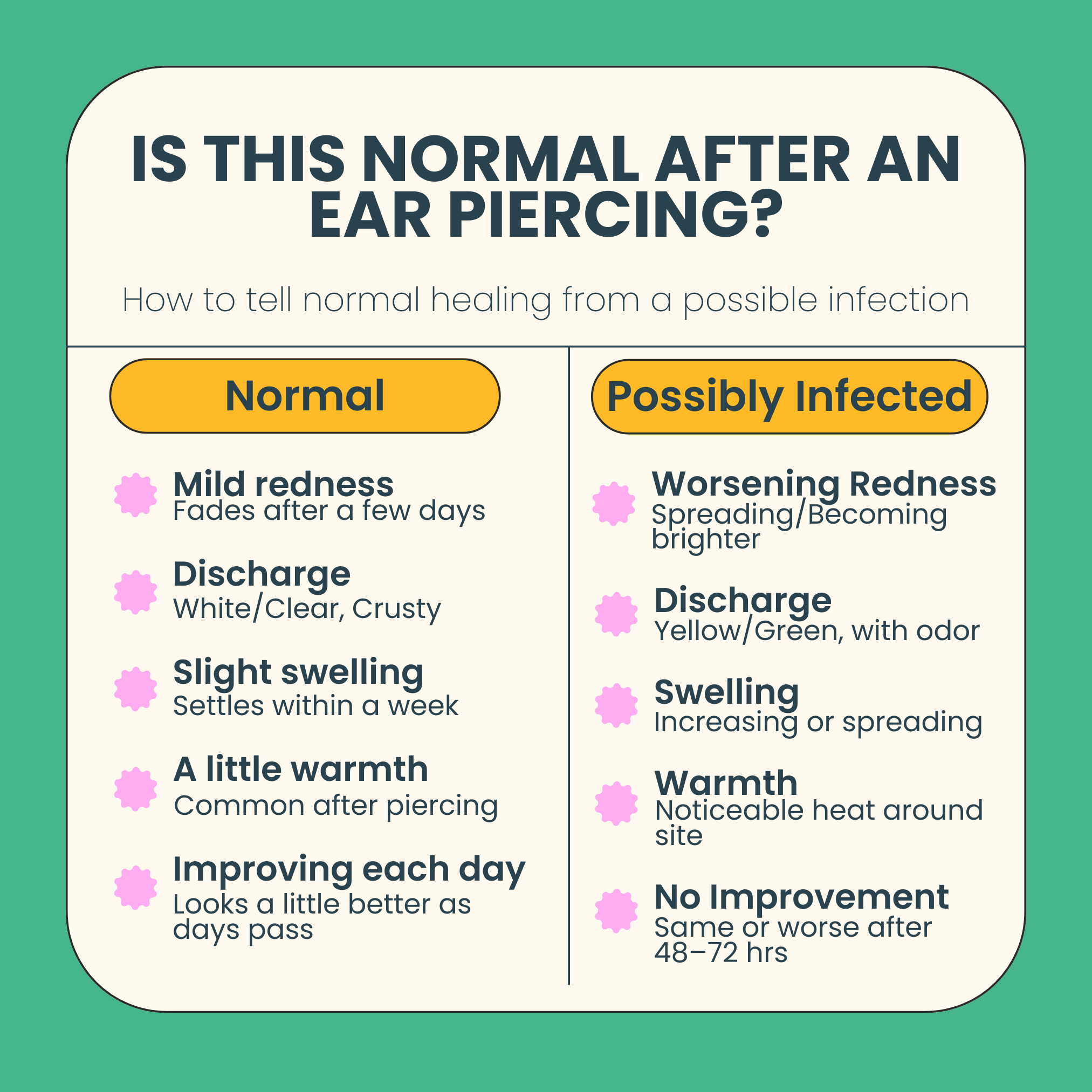
Piercings are small, intentional wounds — and your child’s body heals them like any other wound: by making a fuss. Some redness, mild swelling, and crusty discharge in the first few weeks is completely normal. That crust is dried lymph fluid. Unpleasant to look at, totally benign.
What’s not normal is things getting worse over time — increasing redness, warmth, swelling, or discharge that turns yellow or green and starts to smell. That’s infection territory. For now, let’s focus on keeping things clean so you never have to go there.
The Aftercare Routine (It’s Simpler Than You Think)
Most parents overcomplicate this. They reach for the hydrogen peroxide, Neosporin, or rubbing alcohol — all of which feel right and are actually wrong. All three irritate the piercing and slow healing. Stick to sterile saline spray or a gentle, fragrance-free soap, twice a day.
Daily Care: What to Actually Do
- Clean twice a day with sterile saline spray or gentle fragrance-free soap.
- Rotate the earring gently once a day during cleaning to keep the skin from adhering to the post.
- Hands off unless cleaning — touching with unwashed hands is the number one cause of piercing infections.
- Keep hair products, sunscreen, and lotion away from the site.
What About Swimming?
You don’t have to cancel summer. Cover the piercing with a waterproof bandage — a Tegaderm works well — before getting in the water, and rinse with saline right after. Natural bodies of water carry more bacteria than pools, so avoid those when possible during healing.
How Long Does Healing Take?
Earlobe piercings take 6–8 weeks. Cartilage piercings take 6 months to a full year. Keep the starter earring in for the full healing period. Switching early is one of the most common reasons piercings close or get irritated. Kids touch their piercings constantly and don’t always notice when something feels off — which means you’re the one who needs to check in regularly, especially in those first weeks.
Common Piercing Problems — and What to Do
Mild Infection
Signs: increasing redness, warmth, swelling, and yellow or green discharge with an odor. Bump cleaning to 2–3 times daily, apply a warm compress a few times a day, and use a topical antibiotic like bacitracin for mild, localized redness.
Here’s the counterintuitive part: do not remove the earring. Removing it can trap the infection inside the tissue. As Mary Clare Zak, Pediatric Nurse Practitioner at Poppins, puts it: “Redness and crusting in the first few weeks is usually just healing — but if things are getting worse instead of better, that’s your cue to reach out. Catching it early makes everything easier.” If things aren’t improving within 48–72 hours, contact a clinician — oral antibiotics may be needed.
Itchy Rash (Probably a Nickel Allergy)
Itching and a rash without warmth or pus isn’t an infection — it’s almost always a nickel allergy. Switch to surgical steel, titanium, or 14k gold. OTC hydrocortisone and an antihistamine can help while you wait for the rash to clear.
The Earring Fell Out — or Was Pulled Out
Act fast — new piercings can close within hours. Apply a little petroleum jelly to the post and reinsert gently. Never force it. If you can’t get it back in, see a piercing professional within 24 hours. If it was yanked out traumatically, apply gentle pressure with clean gauze and rinse with saline. Minor tears heal on their own; significant lobe tears or bleeding that won’t stop after 10 minutes of pressure need to be seen. If your child isn’t up to date on tetanus, mention it to your clinician.
The Back Is Disappearing (Embedded Jewelry)
If the clasp or back is going under the skin, stop. Do not attempt to remove it at home. Embedded jewelry needs to be handled by a clinician. Call and get your kid in.
When to Reach Out to a Clinician
Most piercing issues resolve at home or with a quick check-in. Contact a clinician if your child has:
- Increasing redness, swelling, or discharge not improving after 48–72 hours
- Yellow or green discharge with an odor
- Fever alongside signs of infection
- Redness spreading beyond the immediate piercing site
- An earring appearing to go under the skin
- Bleeding that won’t stop after 10 minutes of firm pressure
- Signs of feeling generally unwell — fever, chills, swollen lymph nodes
Quick Tips
- Normal healing: some redness, mild crusting, and white discharge in the first few weeks.
- Infection warning signs: increasing redness, warmth, swelling, green/yellow discharge with odor.
- Clean twice a day with saline or fragrance-free soap. No alcohol, no peroxide, no Neosporin.
- Healing time: 6–8 weeks for lobes, 6–12 months for cartilage.
- Don’t remove the earring during an infection — it can trap it.
- Itchy rash without pus = nickel allergy. Switch metals.
- Embedded jewelry = clinician visit, no DIY.
- Not improving in 48–72 hours? Reach out.
Poppins Is Here
Piercing concerns have a way of surfacing at inconvenient times. That’s exactly what Poppins is here for. Snap a photo and send it to us — our board certified medical team can take a look and tell you whether what you’re seeing is normal healing or something that needs attention. No waiting room, no guesswork.