
Written by: Jenn Schoen, Certified Pediatric Sleep Consultant
Sleep between 10 and 12 months is a fascinating blend of confidence and chaos. On one hand, your baby may be sleeping long nighttime stretches, taking predictable naps, and settling into well-established routines. On the other hand, this is an age of explosive growth—physically, emotionally, and cognitively—which can make otherwise “solid” sleep suddenly feel a bit shaky.
Walking, cruising, babbling, problem-solving, forming attachments… your almost-toddler is busy. And busy brains don’t always settle easily.
This guide explains what’s common for 10–12 month sleep, why sleep may suddenly change, what to expect during the 12-month sleep regression, and how to support your baby through nap transitions, separation awareness, and new motor milestones.
Sleep Overview (Ages 10–12 Months)
By this age, most babies have a clear daily rhythm and the developmental ability to sleep through the night without feeds (unless your clinician advises otherwise). Wake windows stretch, naps become more predictable, and nights often consolidate. That is, as long as developmental leaps aren’t temporarily shaking things up.
Typical Sleep Patterns for 10–12 Month Olds
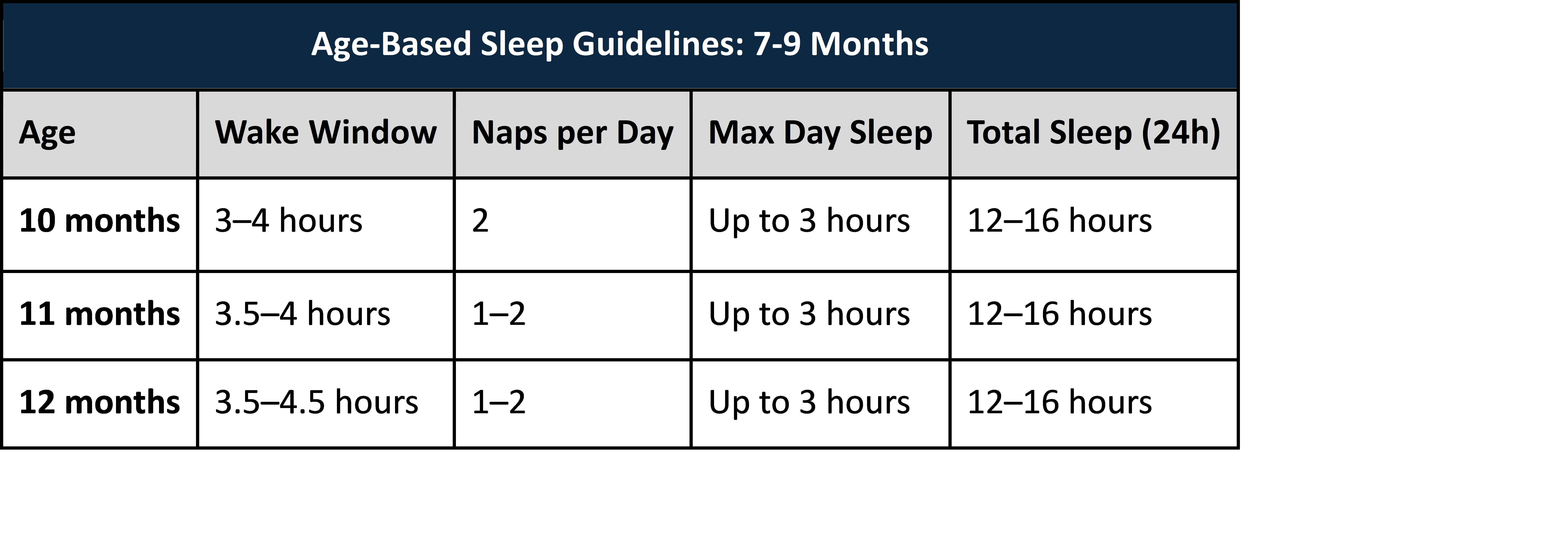
Most babies this age:
- Take two naps totaling up to 3 hours
- Sleep 10–12 hours overnight
- Handle longer wake windows with ease
- Thrive on predictable routines
But even excellent sleepers hit bumps when new milestones or transitions come online.
Why 10–12 Month Sleep Can Suddenly Change
Just when your baby's sleep feels predictable, this age brings a new wave of development. Your 10–12 month old is discovering independence, mastering new motor skills, understanding relationships, and absorbing language—often all at once. These leaps stretch the brain and body in ways that can temporarily disrupt sleep.
Here’s what’s happening beneath the surface—and how each leap affects your child’s sleep.
Gross Motor Development: Standing, Cruising, First Steps
Babies this age are laser-focused on movement—pulling up, cruising along furniture, and experimenting with balance.
Your baby may stand in the crib and not know how to sit back down, or happily practice cruising instead of sleeping. This can delay settling until the skill becomes automatic.
Fine Motor Development: Pinching, Stacking, Pointing
Your baby is mastering tiny, detailed hand movements like flipping book pages or picking up small objects.
These fine motor leaps keep the brain “busy,” making it harder to wind down and leading to longer settling times.
Cognitive Development: Memory, Problem-Solving, Exploration
Babies this age start understanding cause and effect, anticipating routines, and remembering patterns.
They may test boundaries at bedtime or resist transitions because their brain wants to stay engaged. Cognitive leaps can also briefly disrupt nighttime sleep consolidation.
Emotional Development: Attachment & Separation Awareness
This is a peak age for separation awareness. Babies now understand that you continue existing even when you leave—and this realization can be unsettling.
Bedtime becomes more emotional, and night wakings may increase because your baby wants reassurance.
Communication Development: Gestures, Early Words, Social Awareness
Your baby is learning to wave, clap, point, and form early words.
With new social awareness, babies may request interaction at night or practice new sounds during sleep times.
Bottom Line
All of these leaps can create temporary sleep disruptions—even for babies who’ve been sleeping well for months. The good news? Sleep disruptions associated with developmental leaps are temporary and often resolve faster when parents respond with predictable routines, a supportive sleep environment, and lots of time practicing new skills during the day.
The 12-Month Sleep Regression
One of the biggest challenges in this age range is the 12-month sleep regression, which is largely tied to the developmental leaps highlighted above. The regression typically appears around 11–12 months, but can start as early as 10 months.
Common signs of the 12-month sleep regression include:
- Wake frequently after sleeping well
- Fight or refuse the second nap
- Take shorter or inconsistent naps
- Protest at bedtime
- Stand or cruise in the crib instead of lying down
- Become clingier or fussier, especially in the evenings
What Helps the 12-Month Regression?
The good news: this 12-month regression is temporary and driven by growth, not a step backward. Here are the strategies that help most when navigating this regression:
- Stay consistent with your bedtime routine. A predictable bedtime routine signals safety and helps your baby unwind.
- Stick with a calm, cool, dark sleep environment. A safe, supportive sleep environment can help your baby ease into sleep and transition through sleep cycles without waking.
- Practice motor skills during the day. The more your baby practices standing and getting down, the less they’ll do it in the crib.
- Provide lots of physical and sensory activity during the day. Crawling, climbing, and outdoor time support stronger sleep pressure.
- Keep wake windows steady. Too-long or too-short wake windows worsen regression symptoms.
- Don’t introduce any sleep props. Introducing a new sleep prop, like rocking or feeding to sleep, can backfire and require sleep training to eliminate later.
Sleep regressions typically resolve in 2–6 weeks once your baby masters whatever developmental milestone they’re working towards.
Separation Awareness and Its Impact on Sleep
Between 7 and 9 months, babies typically experience a peak in separation anxiety, however, sometimes this can linger into month 10.
If your baby is experiencing challenges with separation anxiety, you might notice:
- Difficulty settling at bedtime due to wanting closeness
- Short naps because linking sleep cycles feels harder
- More night wakings to seek reassurance
- Resistance to independent sleep even if previously mastered
- Increased tears during transitions like crib drop-offs or bedtime routines
The good news? These are temporary signs of growing attachment.
The best response to help your baby through this phase is to offer calm reassurance while keeping routines steady. Here’s what we recommend:
- Keep routines steady. Predictability reduces anxiety.
- Offer brief reassurance. A simple, calm phrase goes a long way (“I’m here. It’s time to sleep now.”).
- Play “short separation” games during the day. Peekaboo, hiding toys, and short disappear-return games build confidence and reassure your little one that you always return.
- Avoid new sleep props. Consistency helps your baby settle independently again.
- Expect gradual improvement. Most babies move through this phase within a few weeks.
Transitioning From 2 to 1 Nap
Most babies don’t officially transition to one nap until 12–18 months, but early signs sometimes appear around 10–11 months. Readiness cues matter more than age—shifting too early can cause overtiredness and disrupted nights.
Here are some of the signs that your baby might be ready to transition from 2 naps to 1 nap a day:
- Shortens the second nap to 20–30 minutes
- Refuses one nap most days
- Handles longer wake windows without fussiness
- Wakes earlier in the morning
- Shows these patterns consistently for a week
Parents often worry that dropping a nap means less total sleep—but babies’ bodies rebalance quickly. When the timing is right:
- Babies compensate with a long, restorative midday nap
- Total sleep often improves once naps consolidate
- You can temporarily move bedtime earlier to prevent overtiredness
- You’re not “taking away” a nap unless your baby is ready
- This is a healthy, natural transition
How to Transition to One Nap
A gradual shift towards 1 nap often helps protect nighttime sleep while reducing the risk of overtiredness. Here’s how the transition works:
- Push Nap 1 Later: Move the morning nap 15-30 minutes later every few days until it starts around 12–1 p.m. Once your baby is down to 1 nap, cap the length of the nap to no more than 3 hours.
- Replace Nap 2 With Quiet Rest Time: In place of a second nap, offer your baby quiet reset time in their room. This looks like dim lights, quiet play (puzzle, coloring, looking at a picture book), and white noise to help your baby’s nervous system reset without sleeping.
- Move Bedtime Earlier (Temporarily): Shift bedtime 30–60 minutes earlier during the adjustment until your baby acclimates to the longer wake windows. You can then gradually move it back once the schedule stabilizes.
- Expect a Short Adjustment Period: Most babies settle into a one-nap rhythm within 1–2 weeks—and often nap more consistently afterward.
With a gradual approach and steady routines, most babies transition smoothly and enjoy longer, more restorative midday naps and more predictable nights.
Handling Standing, Cruising, and Playing in the Crib
Standing practice at bedtime is one of the most common sleep disruptors at this age—and it’s completely normal.
If your baby is anxious to “practice” their new skills at bedtime, here’s the best way to respond:
- Let them explore for a few minutes. Give space if they’re safe and content.
- Help them down calmly. A neutral, low-energy response prevents it from becoming a game.
- Practice new skills during the day. Practice during the day reduces the desire to practice in the crib.
- Stick to your routine and response style. Keep routines the same and avoid adding sleep props, like rocking or feeding back to sleep.
Once your baby masters both the “up” and the “down,” crib settling usually returns to normal.
FAQ: Sleep for 10–12 Month Olds
As your baby approaches their first birthday, parents often have new questions about nap schedules, regressions, wake windows, and night wakings. Here are the most common:
Why is My 12-Month-Old Waking Up Again at Night?
If you 12-month-old was previously sleeping through the night and is now experiencing night wakings, it’s likely the 12-month sleep regression. Regression symptoms often resolve in 2-6 weeks as long as parents keep predictable routines, a supportive sleep environment, and offer lots of time practicing new skills during the day.
How Many Naps Should a 10–12 Month Old Take?
Most take two naps and transition to one nap per day between 12-18 months.
Want Personalized Sleep Support? Poppins Can Help.
If you want expert guidance for building independent sleep skills or preparing for sleep training, Poppins offers:
- Customized bedtime routines
- Age-appropriate sleep schedules and wake windows
- Support for regressions, naps, and night wakings
- Evidence-based sleep training plans
Better sleep starts with the right foundation. We’ll help you build it. Schedule your free sleep consultation with one of our certified pediatric sleep consultants here.