
Written by: Jenn Schoen, Certified Pediatric Sleep Consultant
Understanding wake windows is one of the most powerful tools parents can use to support healthy, restorative sleep. Wake windows—how long your baby can comfortably stay awake between naps—help balance sleep pressure, prevent overtiredness, and create the ideal conditions for falling asleep more easily and staying asleep longer.
This guide breaks down why wake windows matter, how sleep hormones influence your baby’s rhythm, age-by-age recommendations, and practical tips to help your little one sleep more peacefully.
First: What Is Sleep Pressure?
Sleep pressure is the natural buildup of tiredness that accumulates the longer your baby is awake. Think of it as your baby slowly collecting enough “sleepiness” to be ready for their next nap or bedtime. When sleep pressure builds at the right pace, your baby becomes drowsy and transitions smoothly into sleep.
But if your baby stays awake too long, sleep pressure rises too high. That leads to overtiredness—a state where your baby’s brain becomes wired instead of relaxed, making sleep significantly harder.
Research shows that babies build pressure faster than older children and adults because their brains accumulate adenosine—the chemical that drives sleep pressure—much more quickly. This is why young infants need shorter wake windows to stay in their ideal window, and why those windows naturally lengthen as their brain and sleep systems mature.
This is where age-appropriate wake windows come in. Wake windows help you time sleep before that tipping point, keeping your baby in the “just tired enough” zone for smoother naps and easier nights.
"Wake windows work because they sync with your baby’s biology. When you time sleep before cortisol rises, you’re helping your baby fall asleep faster and stay asleep longer," says Jenn Schoen, a Certified Pediatric Sleep Consultant with Poppins.
How Wake Windows Support Your Baby’s Natural Biology
Wake windows do more than keep your baby on a predictable schedule—they help regulate the biological processes that make sleep possible in the first place. Your baby’s ability to fall asleep and stay asleep is driven largely by two hormones that work in constant balance:
Melatonin: The Sleep-Inducing Hormone
Melatonin is the hormone that signals your baby’s body that it’s time to shift from alertness into rest. As the wake window progresses, melatonin helps quiet the nervous system, lower core body temperature, and prepare the brain for sleep.
“Melatonin isn’t an on/off switch—it slowly helps your baby’s body wind down as the wake window unfolds. When you start dimming lights and lowering stimulation about an hour before bedtime, you’re working with that natural rise in melatonin. It’s one of the simplest ways to help your baby ease into sleep,” says Jenn.
Cortisol: The Alertness Hormone
Cortisol keeps your baby alert and awake. It rises gradually as your baby approaches the end of a healthy wake window—this is your body’s way of keeping them engaged with the world. But if your baby stays awake too long, cortisol surges. This “overtired spike” makes babies wired, fussy, and harder to soothe, even when they’re exhausted.
Cortisol spikes don’t just make falling asleep tough—they also stick around, making it harder for your baby to stay asleep. That leftover cortisol is a major driver of short naps and those frustrating frequent night wakings.
"Once a baby becomes overtired, their cortisol spikes, and the brain shifts into a more alert, wired state. That’s why proper wake windows are so powerful—they keep your baby out of that stress-response zone," advises Jenn.
The Role of Wake Windows in Hormone Balance
Wake windows help you catch your baby at the perfect moment—when melatonin is rising and cortisol is still low. That balance is what makes it easier for them to relax, fall asleep, and stay asleep. When you follow age-appropriate wake windows, you’re working with your baby’s biology instead of against it, setting the stage for smoother naps and more restful nights.
How to Apply Wake Windows by Age (0–12 Months)
Wake windows act as your baby’s internal timing system. By using these ranges to guide naps and bedtime, you’re helping your baby build the right amount of sleep pressure without tipping into overtiredness, which can trigger cortisol spikes and make sleep significantly harder.
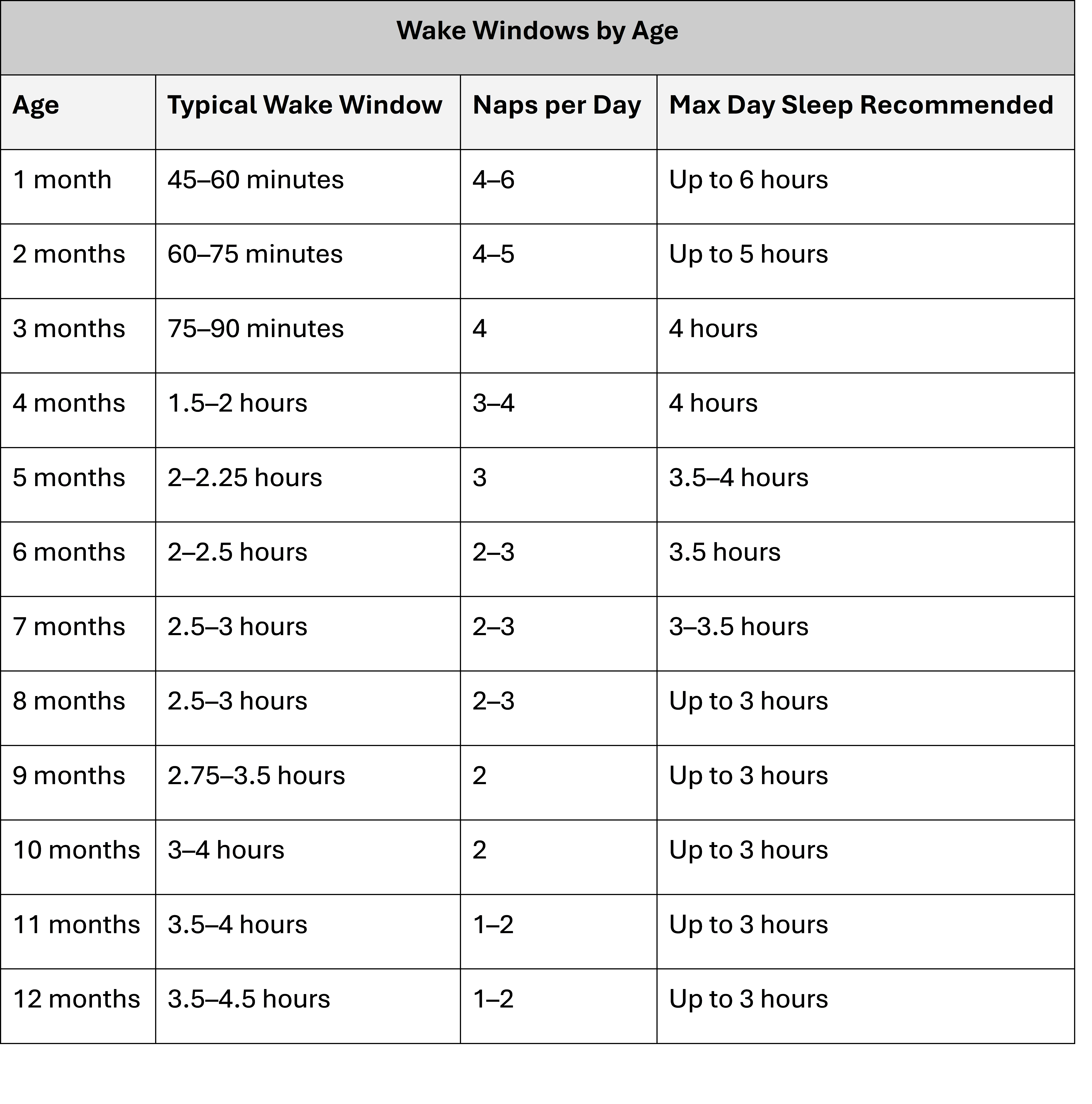
“I always tell my clients to use age-appropriate wake windows as their guide, but to also watch their baby’s sleepy cues—like yawns, eye rubbing, zoning out, or fussiness—to pinpoint the right moment for sleep. Every baby is different. Wake windows set the structure, but sleepy cues help you hit that sweet spot where sleep pressure is just right,” says Jenn.
How to Use Wake Windows: A Step-by-Step Guide
Wake windows are most effective when you use them in a simple, predictable way throughout your baby’s day. Here’s a clear, practical method to follow:
Step 1: Start the Wake Window When Your Baby Wakes
The clock starts the moment your baby’s eyes open—whether it’s from a nap or the morning wake-up. If your baby wakes at 7:00 a.m. and is 4 months old, the first nap should begin between 8:30–9:00 a.m. This ensures sleep pressure builds gradually and appropriately.
Step 2: Use the Window as a Range, Not an Exact Minute
Wake windows aren’t a strict countdown. Think of them as your target zone. If your 6-month-old has a 2–2.5 hour wake window, aim to create a nap opportunity somewhere within that window, guided by your baby’s sleepy cues. This keeps you flexible while still preventing overtiredness.
Step 3: Begin the Routine 10–20 Minutes Before the Window Ends
Your baby should be asleep by the end of the window—not just starting the routine. For example, a 3-month-old with a 75–90 minute wake window should begin their pre-nap routine around 60–75 minutes after waking. This “leans in” to the work melatonin is already doing to help ease your baby into sleep.
Step 4: Watch Sleepy Cues to Fine-Tune the Window
Cues will help you decide whether to shorten or lengthen the window within the range.
Common cues include red eyebrows, zoning out, fussiness, rubbing eyes, or becoming quiet.
If cues show up early, shorten the window by 10–15 minutes. If your baby seems content and alert, you can stretch toward the higher end.
Step 5: Adjust Wake Windows Throughout the Day
Many babies need the shortest wake window in the morning and slightly longer windows later in the afternoon.
Step 6: Reset the Window After Every Nap—Even Short Ones
If your baby takes a 25-minute nap, the next wake window doesn’t change.
Short naps don’t mean they can stay awake longer. In fact, it may be a signal of overtiredness. "When parents see their baby take a 20–30 minute catnap, it’s easy to assume the nap was short because the baby wasn’t tired enough—and that the next wake window should be stretched. In reality, extending the window after a short nap often backfires, because babies become overtired much faster," says Jenn.
Step 7: Protect the Last Wake Window Before Bed
This window heavily influences nighttime sleep.
- If it’s too long → cortisol spikes, bedtime battles, night wakings.
- If it’s too short → your baby may treat bedtime like another nap.
Step 8: Reassess Wake Windows During Developmental Changes
Wake windows often need adjustment during regressions, nap transitions, growth spurts, teething, or illness. If sleep suddenly deteriorates, revisit the chart to ensure the timing is still age-appropriate.
Putting It All Together
When you use wake windows consistently—while still watching your baby’s cues—you’re helping their body maintain the ideal balance of sleep pressure and prevent the cortisol spikes that lead to overtiredness. This timing-based approach creates smoother naps, easier bedtimes, and better overnight sleep.
FAQ: Wake Windows & Baby Sleep Timing
As you start paying attention to wake windows, it’s completely normal to have questions. Babies aren’t robots, and wake windows can feel confusing at first. Here are the questions parents ask most often—and clear, practical answers to help you find the right rhythm for your baby.
What Happens If My Baby’s Wake Window is Too Long?
They can become overtired, leading to cortisol spikes that make it harder to fall asleep and stay asleep. This often results in short naps, bedtime battles, and frequent night wakings.
What If My Baby Seems Tired Before the Wake Window is Over?
Follow your baby, not the chart. Age-based wake windows are helpful guides, but sleepy cues should always come first.
How Strict Do I Need to Be with Wake Windows?
Think of wake windows as ranges, not rigid rules. Staying within the general window helps you avoid overtiredness without over-focusing on the clock.
Can Wake Windows Help My Baby Sleep Through the Night?
Yes. When babies go down at the right time, they’re better able to settle on their own and link sleep cycles overnight. But it’s important to remember that sleeping through the night is also developmental—it will come with time.
Do Wake Windows Change During Regressions or Illness?
Yes. During growth spurts, regressions, teething, or sickness, wake windows often need to be shortened because babies tire more quickly.
Want Personalized Sleep Support?
If you’re feeling unsure about wake windows, nap timing, or how to balance sleepy cues with schedules, Poppins can help. Our pediatric experts provide personalized, on-demand support and sleep guidance tailored to your baby’s age, temperament, and developmental stage.
Get proactive, evidence-based help—anytime you need it.