
Look, we get it. Between the group texts blowing up about half the class being out sick and your neighbor's dire warnings about "the worst flu season ever," it's easy to feel like you're one sneeze away from full-on panic mode.
Here's the truth: Flu activity is high right now. Kids are getting sick. Emergency rooms are busy. And you can absolutely handle this with the right information and game plan.
At Poppins, we're all about helping you feel informed and supported—especially when it feels like everyone around you is coming down with something. This guide from the CDC breaks down what's actually happening this flu season, what to watch for, when to worry (and when not to), and how to get through it without losing your mind.
What's Happening Right Now
Flu activity is currently high and widespread across the U.S., according to the CDC's national surveillance data. Translation: It's not just your kid's classroom—this is everywhere.
Here's what we're seeing:
- More kids are showing up with flu-like symptoms. Pediatric offices, urgent cares, and ERs are busier than usual.
- Influenza A is the main player this season. Different flu strains circulate each year, and this year's headliner is Influenza A.
- Winter = prime flu time. When kids are indoors more, in closer contact, and sharing everything from crayons to questionable snacks, viruses spread faster.
Flu activity typically peaks in the winter months, but every season has its own personality. Some are mild. Some hit harder. This one? It's making itself known.
Why Flu in Kids Still Matters (Even Though Most Kids Are Fine)
Let's start with the reassuring part: Most children recover from the flu just fine. With rest, fluids, and a lot of screen time you'll later pretend didn't happen, they bounce back.
But here's why we still take it seriously:
Flu hits kids harder than a typical cold. The fatigue is real, the fever is higher, and the general misery is next-level. If your kid suddenly looks like they've been hit by a truck, that's the flu doing its thing.
Little ones face higher risks. Children under 5—especially babies and toddlers under 2—are more vulnerable to complications like pneumonia, dehydration, or worsening of chronic conditions.
Kids with underlying health conditions need closer monitoring. If your child has asthma, diabetes, heart conditions, or a weakened immune system, flu can be trickier to manage.
Every year, kids are hospitalized for the flu. And yes, pediatric flu deaths are reported annually in the U.S. We're not saying this to scare you—we're saying it because recognizing symptoms early and knowing when to ask for help actually matters.
Bottom line: Flu isn't "just a bad cold." It's worth understanding and preparing for.
Not All Flu Seasons Are Created Equal
Here's something that might ease your stress: Flu seasons vary. A lot.
How severe a season feels depends on:
- Which flu strains are circulating (some are nastier than others)
- How much immunity kids have from past exposures or vaccination
- Community vaccination rates (the more people vaccinated, the less flu spreads)
Some years are milder. Some years lead to more hospitalizations. Even when headlines sound apocalyptic, remember: flu season is unpredictable by nature. Understanding that variability helps you take a breath and focus on what you can actually control.
The Flu Vaccine: Your Best Defense (Yes, Even Now)
Let's cut through the noise: The flu vaccine is the single most effective tool we have to protect kids during flu season. Not perfect, but the best we've got.
Here's what you need to know:
- Recommended for all kids 6 months and older. Every year. Because flu strains change.
- It lowers the risk of severe illness and hospitalization. Even if your vaccinated kid gets the flu (it happens), symptoms are typically milder.
- It's not too late. Flu can circulate for months, so if you haven't vaccinated yet, now is still better than never.
- Especially important for high-risk kids. Younger children and those with chronic health conditions benefit the most.
"I always tell parents: the flu vaccine isn't about achieving perfection—it's about stacking the odds in your kid's favor," says Aly Insull, Pediatric Nurse Practitioner at Poppins. "Even if they still catch the flu, we consistently see that vaccinated kids have shorter, less severe illnesses, which is better for everyone."
What Flu Actually Looks Like in Kids
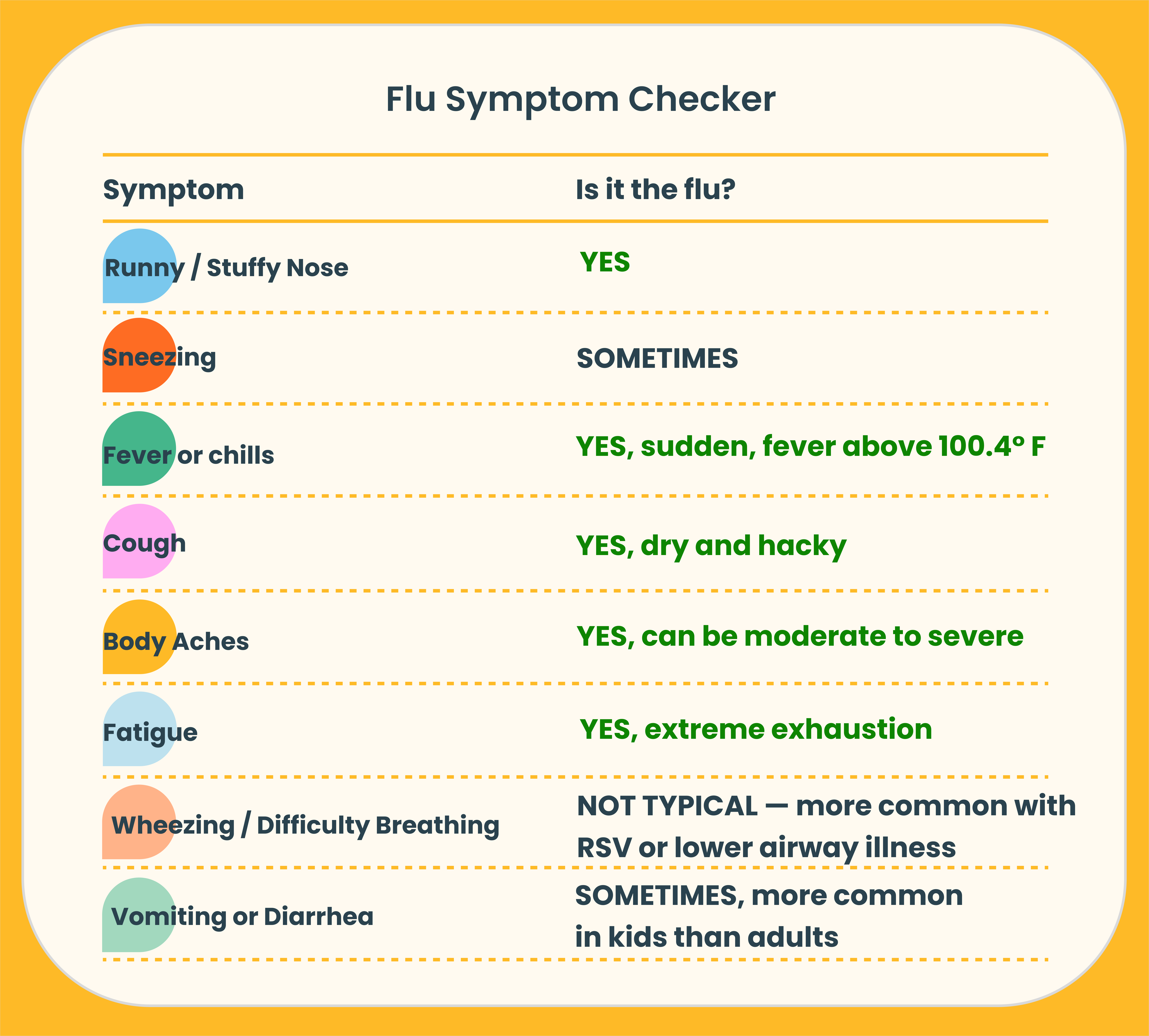
Flu doesn't tiptoe in—it announces itself. Symptoms often start suddenly and hit hard.
Watch for:
- High fever or chills (often the opening act)
- Cough or sore throat
- Runny or stuffy nose
- Body aches, headache, general "I feel terrible"
- Extreme fatigue (the kind where they're too tired to even complain)
- Vomiting or diarrhea (more common in kids than adults)
The key difference between flu and a cold? Kids with the flu look and feel wiped out. If your usually bouncy kid is lying on the couch staring into the middle distance, you're probably dealing with the flu.
What You Can Do at Home (AKA: The Supportive Care Playbook)
Most kids with the flu can be cared for at home. Your job? Make them comfortable while their immune system does its thing.
Your game plan:
✅ Fluids, fluids, fluids. Water, broth, popsicles, diluted juice—whatever they'll actually drink.
✅ Rest. Yes, this means unlimited screen time guilt-free. They're sick. Let them watch trash TV.
✅ Fever management. Acetaminophen (Tylenol) or ibuprofen (Motrin/Advil) as directed for age and weight.
✅ Comfort measures. Saline spray, a cool mist humidifier, or nasal suction for congestion.
✅ Keep them home. Until they're fever-free for 24 hours without medication and feeling better.
What doesn't work: Antibiotics. Unless there's a secondary bacterial infection (like an ear infection or pneumonia), antibiotics won't help. Flu is a virus.
When to Actually Worry: Red Flags That Mean "Call the Doctor"
Here's your framework for when to escalate care. Save this list—screenshot it, print it, tattoo it on your brain.
Reach out to Poppins or seek medical care if your child has:
🚨 Trouble breathing or breathing very fast (this includes working hard to breathe, flaring nostrils, or chest retractions)
🚨 Signs of dehydration: Dry mouth, very few wet diapers, no tears when crying, extreme thirst
🚨 Extreme sleepiness, confusion, or difficulty waking up (more than typical sick-kid sleepiness)
🚨 Symptoms that improve, then suddenly get worse (classic sign of a secondary infection)
🚨 Fever that lasts longer than expected or is hard to control (typically more than 3-4 days or spiking very high despite medication)
🚨 Bluish lips or face (this is a 911-level emergency)
Special note: If your child has asthma, diabetes, a heart condition, or any chronic health issue, don't wait it out. Call your pediatrician early when flu symptoms start. They may want to see your child sooner or prescribe antiviral medication.
The Bottom Line
Flu season is here, it's active, and yes—it's going to move through schools and households like wildfire. But you've got this.
Your action plan:
- Vaccinate if you haven't yet. It's still worth it.
- Know the symptoms. Sudden onset, high fever, total exhaustion = probably flu.
- Have your home care toolkit ready. Fever reducers, fluids, humidifier, patience.
- Know when to escalate. Trust your gut, and use the red flag list above.
- Keep sick kids home. For everyone's sake.
Flu season is stressful, but it doesn't have to be overwhelming. With the right information and a solid plan, you can navigate this like the capable, resourceful parent you are.
And if you need support along the way? That's exactly what Poppins is here for, anytime, anywhere 24/7.