Cedar Fever in Kids: Is It Allergies or a Cold?

If your child suddenly starts sneezing, sniffling and rubbing watery eyes in the middle of a Texas winter, it may not be a cold at all. It could be cedar fever.
Despite the name, cedar fever isn’t an infection and doesn’t typically cause a true fever. It’s an allergic reaction to pollen from Ashe juniper trees, commonly called mountain cedar in Texas. If your child has a temperature of 100.4°F or higher, especially along with body aches or generally feeling sick, an illness is more likely than cedar allergies.
What is cedar fever?
“Cedar fever” is the name commonly used in Texas for seasonal allergy symptoms caused by mountain cedar pollen.
And technically, mountain cedar isn’t a cedar at all. In Texas, the tree responsible is primarily the Ashe juniper, which is especially common throughout Central Texas and the Hill Country.
During cedar season, huge numbers of Ashe junipers can release pollen around the same time, creating very high concentrations of pollen in the air. Because the pollen is carried by the wind, children can have symptoms even if there aren’t cedar trees right outside your home.
When is cedar fever season in Texas?
Cedar pollen typically begins increasing around mid-December, peaks around mid-January, and gradually tapers off toward the beginning of March.
Texas cold fronts can make symptoms noticeably worse. The cold, dry and windy conditions surrounding a front can trigger Ashe junipers to release large amounts of pollen at once.
That timing is part of what makes cedar fever especially confusing for parents: cedar season happens right in the middle of cold and flu season.
What are cedar fever symptoms in kids?
Cedar allergies can cause:
- Frequent sneezing
- Clear runny nose
- Stuffy or congested nose
- Itchy, watery or red eyes
- Itchy nose or throat
- Cough
- Sore or scratchy throat from post-nasal drip
- Headache or sinus pressure
- Fatigue
Itching and repeated sneezing are especially helpful clues that your child’s symptoms may be allergies rather than a viral illness.
Is it cedar fever or a cold?
There’s plenty of overlap, so one symptom alone usually won’t tell you. Instead, look at the whole picture. Here’s how the two tend to compare.
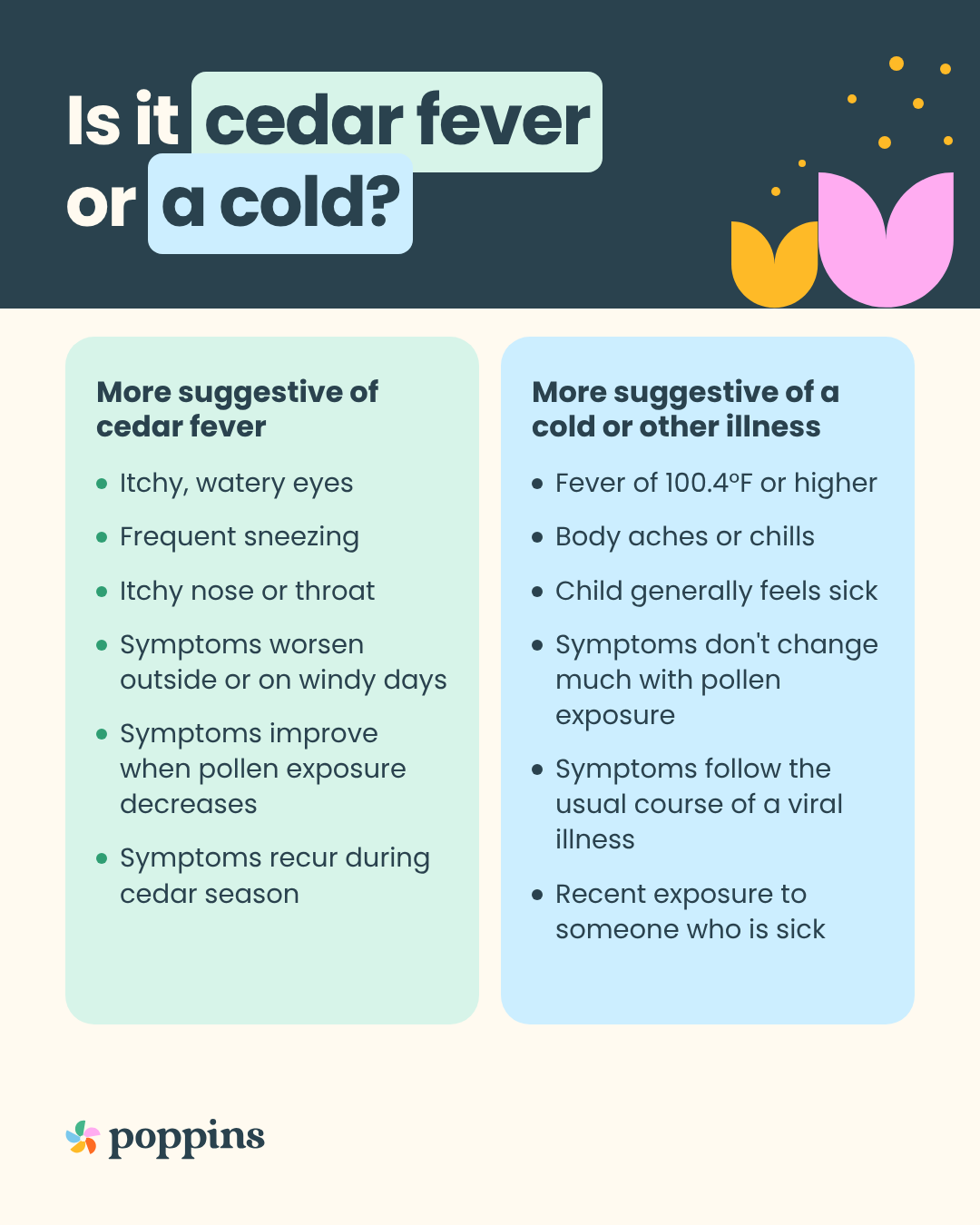
Itching is one of the most helpful clues. “When a parent texts me during cedar season, the first thing I ask is whether their child is itchy,” says pediatric nurse practitioner Alyson Insull. “Itchy, watery eyes and nonstop sneezing usually point to allergies. A true fever, or a child who just seems really sick, makes me think it’s an infection instead.”
The pattern over time can help, too. If symptoms flare after outdoor play on high-pollen or windy days and ease up when your child spends more time indoors, allergies become more likely.
Can cedar pollen make asthma worse?
Yes. Seasonal allergens such as cedar pollen can trigger asthma symptoms in some children.
During cedar season, watch for:
- Increased coughing
- Wheezing
- Chest tightness
- Shortness of breath
- Needing rescue medication more often than usual
Children with asthma should continue following their usual asthma treatment plan during cedar season and keep prescribed rescue medication readily available.
If your child’s asthma symptoms are becoming more frequent, interfering with activity or sleep, or becoming harder to control, reach out to a pediatric clinician.
How can I help my child’s cedar fever at home?
You can’t completely avoid airborne pollen, but you can reduce your child’s exposure during heavy cedar season.
Check the pollen count
Pollen levels can vary significantly from day to day. On very high-pollen days—especially dry, windy days around a cold front—consider limiting prolonged outdoor activities.
Keep windows and doors closed
It may be tempting to open the windows on a nice Texas winter day, but keeping them closed during high-pollen periods can help keep allergens outside.
Change clothes after outdoor play
Pollen can stick to clothing, hair and skin. Have kids change clothes after spending significant time outside.
A bath or shower before bed can also help prevent pollen from transferring to pillows and bedding.
Wash bedding regularly
Wash sheets and pillowcases regularly during heavy pollen season, especially if your child has significant symptoms.
Consider a HEPA air purifier
A portable HEPA air purifier in your child’s bedroom may help reduce airborne allergens indoors. Regularly changing your home’s HVAC filter can also help reduce the amount of pollen circulating through the house.
Try saline
Saline nasal spray or an age-appropriate saline rinse can help wash pollen and mucus from the nose and soothe irritated nasal passages.
What allergy medicine can kids take for cedar fever?
The right treatment depends on your child’s age, symptoms and medical history.
Antihistamines can help relieve symptoms such as sneezing, itching and a runny nose. Newer, less-sedating antihistamines are generally preferred over older antihistamines that are more likely to cause drowsiness.
For children with more significant nasal congestion or persistent allergy symptoms, steroid nasal sprays can be very effective.
Some allergy medicines are approved for children as young as age 2, while others are labeled only for older children. The minimum age can vary by the specific medication and formulation, so always check the label for the product you are using.
For infants, toddlers, children taking other medications, or anytime you’re unsure which product or dose is appropriate, talk with a pediatric clinician before starting a new allergy medicine.
Saline nasal sprays and rinses are another medication-free option that can help clear pollen from the nose.
Prescription treatment may also be recommended when needed.
When should I call a pediatric clinician?
Reach out if:
- You’re not sure whether your child’s symptoms are allergies or an illness
- Symptoms are disrupting sleep, school or normal activities
- Allergy symptoms aren’t improving with appropriate home care or medication
- Your child develops significant ear pain
- Your child develops worsening facial or sinus pain
- Your child has worsening asthma symptoms
- Your child develops a fever of 100.4°F or higher
Seek urgent medical care for trouble breathing, significant wheezing that isn’t responding to your child’s asthma plan, blue or gray lips or face, or other signs of respiratory distress.
The bottom line
Cedar fever may be a Texas winter tradition, but it isn’t actually a fever.
Mountain cedar pollen typically begins increasing in December, peaks around January and gradually tapers off toward early March. Sneezing, itchy or watery eyes, an itchy nose or throat, and symptoms that repeatedly worsen outdoors or on windy days all point toward cedar allergies.
A temperature of 100.4°F or higher, body aches or a child who seems truly sick should make you think beyond cedar fever and consider a viral or other illness instead.
Not sure? Send a photo to a Poppins pediatric clinician.
Last reviewed: October 14, 2026