
Written by: Jenn Schoen, Certified Pediatric Sleep Consultant
By the time your baby reaches 3–6 months, sleep starts to feel a little less like survival mode and a little more like a rhythm. Wake windows lengthen, nights begin to stretch, and you may even catch yourself whispering, “Wait…was that a six-hour stretch?”
But this stage also brings big developmental leaps—including the famous 4-month sleep regression—that can shake things up just when you thought you had everything figured out.
This guide walks you through what sleep typically looks like for 3–6 month olds, how to build healthy sleep habits without doing anything rigid or intense, and how to navigate the very normal bumps along the way.
What This Guide Covers
Sleep between 3–6 months evolves quickly, and many parents aren’t sure what’s “normal” anymore. This guide explains:
- Typical 3–6 month sleep patterns
- How wake windows and daytime sleep shift
- Gentle ways to build independent sleep skills
- The 4-month sleep regression and how to handle it
- How to manage short naps and catnaps
- When and how to transition from bassinet to crib
- Rolling and the swaddle transition (and how to keep sleep safe)
By understanding these pieces, you’ll feel more confident supporting your baby’s sleep—without needing strict schedules or formal sleep training.
Sleep Overview for 3–6 Month Olds
Between 3 and 6 months, sleep becomes more organized. Sleep cycles lengthen, melatonin production increases, and babies begin connecting some cycles independently. You’ll likely notice longer night stretches, more distinct nap patterns, and clearer sleepy cues.
Typical 3–6 Month Sleep Patterns
Here are what sleep patterns typically look like from months 3 through 6:
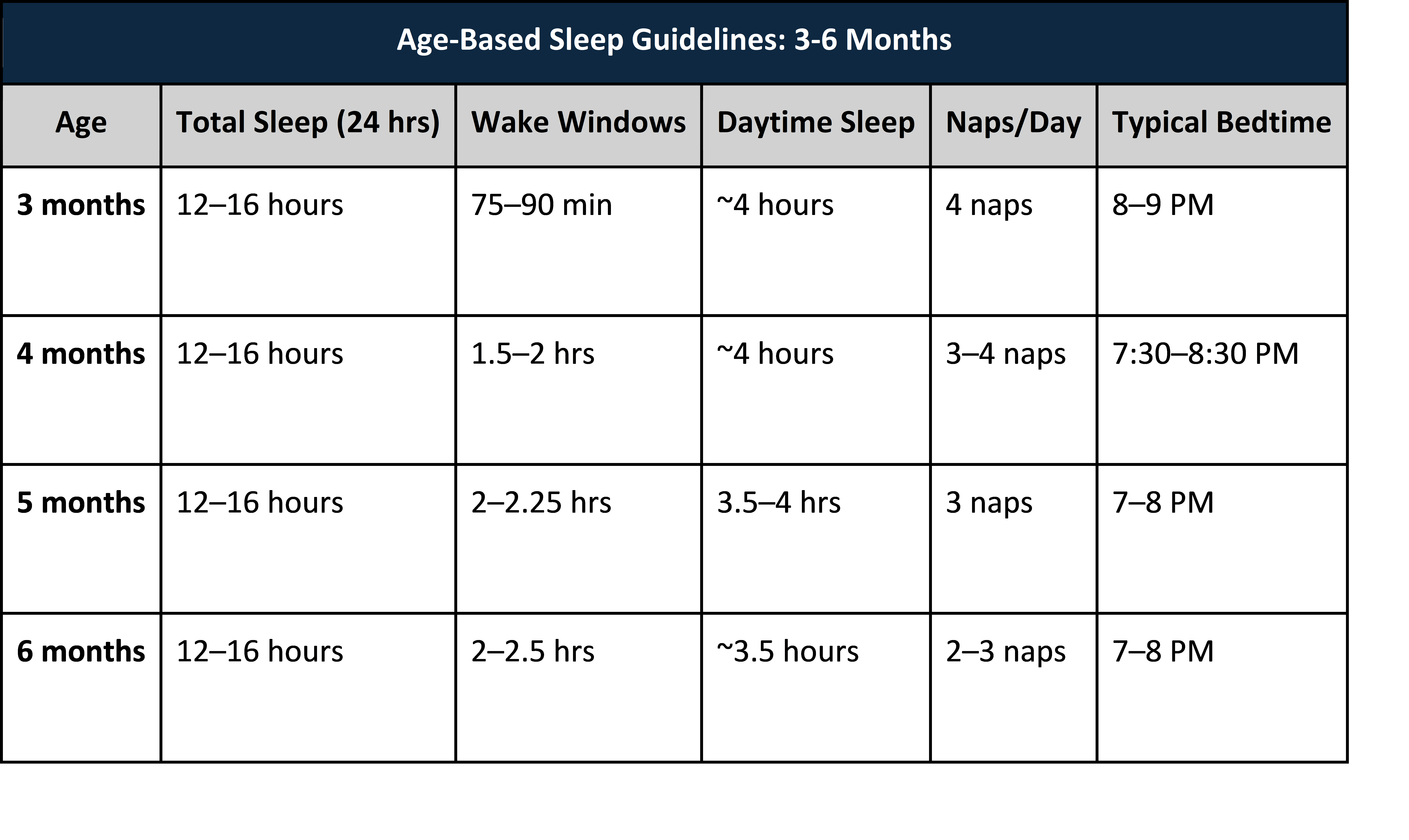
You’ll notice these ranges are fairly broad—that’s because every baby develops at their own pace. Use them as a helpful guide, not a strict schedule.
Building Sleep Skills (Without Formal Sleep Training)
Beginning in month 3, your baby starts to form true sleep habits as melatonin production comes online and their circadian rhythm matures. That makes this the ideal time to begin layering in healthy sleep habits to avoid the need for formal sleep training down the road.
Think of this stage as planting seeds: you’re not expecting instant results, but every small, consistent practice helps sleep come a little easier over time.
1. Practice Drowsy-But-Awake
“Drowsy but awake” gets talked about a lot. At 3 months, think of it as gentle skill building: you’re simply giving your baby opportunities to experience falling asleep in the crib with your support nearby.
A few times a day—before a nap or at bedtime—place your baby in the crib or bassinet while they’re still awake. If they start to cry, pick them up right away and offer comfort to help them settle. If they’re calm, let them relax in the crib for as long as they’re comfortable, even if it’s just a minute or two. While it seems small, this simple act allows your baby to practice settling outside of your arms.
The best time to try this? Look for opportunities when your baby is:
- Calm and settled
- Recently fed
- In a fresh diaper
- Showing early sleepy cues
- Relaxed in your arms or after your routine
Some days they’ll need help. Other days, they may drift off. Both count.
This slow, repetitive exposure builds confidence and lays early foundations for independent sleep—without tears, pressure, or formal sleep training.
2. Create a Safe, Support Sleep Environment
These environmental cues make sleep easier and support smoother transitions:
- Swaddle: Remember to transition to a sleep sack once rolling begins.
- White noise: Mask household sounds and signal sleep (7 ft from crib and no louder than 50 decibels).
- Dark room: Helps support melatonin release.
- Cool temperature: 68–72°F is ideal sleep conditions.
These small habits lay the groundwork for smoother sleep later.
3. Follow a Consistent Bedtime Routine
A predictable routine is one of the strongest signals you can give your baby’s nervous system that sleep is coming. At this age, routines don’t need to be fancy—they just need to be consistent.
A great 20–30 minute routine might include:
- Bath or wipe-down
- Fresh diaper and PJs
- Feed
- Short book
- Lullaby or snuggle
- Sleep sack or swaddle
- Dim lights + white noise
Routines reduce stimulation and help babies shift from alert to drowsy.
4. Reduce Sleep Props Slowly
Now that your baby is beginning to form sleep habits, it’s a good time to start transitioning away from sleep props like rocking, bouncing, or feeding to sleep. There’s nothing inherently wrong with these tools, but some babies develop strong associations to them—making it harder to build independent sleep skills. When that happens, you may see challenges like longer settling times at bedtime or frequent night wakings that eventually require sleep training to resolve.
The good news: at around 3 months, sleep habits are still very flexible. You can gradually phase out these props now to help prevent a strong dependency from forming.
A gentle progression might look like:
- Week 1: Rock until 90% asleep
- Week 2: Rock until drowsy, put down awake
- Week 3: Rock for less time, put down awake
- Week 4: Offer hands-on comfort in crib
This approach keeps your baby supported while gradually shifting them away from sleep associations that can prevent them (and you!) from getting a restful night's sleep later on.
Common Sleep Challenges from 3-6 Months (and How to Navigate Them)
Between 3–6 months, babies experience a huge developmental shift in how they sleep. Day/night confusion resolves as their circadian rhythm strengthens, melatonin production increases, and they begin to connect some sleep cycles on their own.
While sleep improves dramatically during this stage, it doesn’t mean it’s smooth sailing. Here’s how to navigate the most common issues that pop up between 3 and 6 months.
1. The 4-Month Sleep Regression
The 4-month regression typically hits between 3–5 months. Sleep cycles mature, and your baby begins sleeping more like an adult—and yes, this transition can be disruptive.
Common signs your baby is hitting the 4-month sleep regression include:
- More frequent night wakings when they were just starting to sleep longer stretches
- Difficulty settling for sleep without help
- Suddenly resisting bedtime
- Increased fussiness or alertness
While this regression can feel intense, small, consistent adjustments make a big difference:
- Keep the sleep environment cool, dark, and calm.
- Add 1-2 extra soothing steps at bedtime like extra cuddles or a gentle massage.
- Keep wake windows active with lots of tummy time to build sleep pressure.
- Follow age-appropriate wake windows to prevent overtiredness.
Most regressions last 2–6 weeks. You’re not imagining things—this stage is tough. But remember: it’s temporary.
2. Managing Catnaps (Why Short Naps Are Normal)
If naps are still short or unpredictable, don’t panic—this is developmentally typical. Babies under 6 months aren’t yet able to link daytime sleep cycles, so 30–60 minute catnaps are expected.
Because daytime sleep is so variable at this age, it’s best to follow age-appropriate wake windows rather than a strict nap schedule. This flexible approach helps your baby get sleep opportunities at the right times and prevents overtiredness, which can make settling even harder.
Here’s how to use wake windows to structure your baby’s sleep:
- When you baby wakes, start the clock
- As the end of their wake window approaches, watch for sleepy cues (red eyebrows, fussiness, yawning, rubbing eyes)
- When sleep cues appear or you reach the end of the wake window, offer them a nap in a dark, quiet room
- Use a brief pre-nap routine (similar to your bedtime routine, but, ideally shorter)
- Place baby down drowsy but awake when possible
While it’s not the predictable schedule you imagined (don’t worry, that comes later!), this flexible approach works with your baby’s biology to keep their sleep-wake rhythms in balance and save you your sanity.
3. Transitioning From Bassinet to Crib
The bassinet-to-crib transition is a big milestone. Most babies switch sometime between 3–6 months when:
- They approach the weight/height limits of their bassinet
- They begin rolling or showing mobility
- They need more space for longer stretches
To help the transition go smoothly, try these tips:
- Recreate familiar cues: Routine, white noise, sleep sack
- Keep the crib bare: Firm mattress, fitted sheet only
- Avoid switching back and forth between the bassinet and crib (this can confuse your baby and make any resistance last longer)
4. Rolling and the Swaddle Transition
Rolling is another exciting milestone that often hits between 3–6 months. Here’s the thing: the moment your baby shows any sign of rolling, it’s time to stop swaddling—this is a key safe sleep milestone.
Here’s how safe sleep guidelines adjust once your baby is rolling:
- Move to a sleep sack (arms should be free)
- Always start sleep by placing your baby on their back
- If they roll to their stomach, no need to turn them back since they can now safely roll themselves back over if needed
- Keep the crib clear of blankets, pillows, or toys
With the switch to the sleep sack, your baby may flail or startle more at first. Don’t panic—this is common. With consistency, most adjust within a few days to a week.
FAQ: Sleep for 3–6 Month Olds
Why is My 4-Month-Old Waking Up More Often?
What you’re seeing is most likely the 4-month regression, a normal shift in sleep cycles. See tips above for how to help your baby through this common developmental phase.
How Long Should My 4-Month-Old Stay Awake Between Naps?
Recommended wake windows vary by age. At 4 months, the average wake window is 1.5-2 hours. As the end of the wake window approaches, watch for sleepy cues (e.g. red eyebrows, rubbing eyes, yawning, fussiness, zoning out), which signal that your baby is ready for sleep.
Are Short Naps normal at 4-Months-Old?
Yes—most babies don’t consolidate naps until closer to 6 months, so 30-60 minute catnaps are developmentally common.
Should My 4-Month-Old Transition Out of the Bassinet to the Crib?
Most babies switch between 3–6 months. If your child is rolling or has reached the weight/height limits of their bassinet, then it’s best to transition them to the crib for safety.
How Can I Help My 4-Month-Old Fall Asleep Independently?
Practice drowsy-but-awake, keep a consistent bedtime routine, and continue gradually reducing sleep props. By around 4 months, your baby is also developmentally ready for gentle sleep training methods, if that feels like a good fit for your family. You can book a free consultation here with one of our pediatric sleep coaches if you’d like to explore sleep training further.
Want Personalized Sleep Support? Poppins Can Help.
If you want expert guidance for building independent sleep skills or preparing for sleep training, Poppins offers:
- Customized bedtime routines
- Age-appropriate sleep schedules and wake windows
- Support for regressions, naps, and night wakings
- Evidence-based sleep training plans
Better sleep starts with the right foundation. We’ll help you build it. Schedule your free sleep consultation with one of our certified pediatric sleep consultants here.