
What is it?
Molluscum contagiosum is a common viral skin infection that causes small, smooth, flesh-colored or pink bumps with a tiny dimple in the center. The bumps are usually painless and often slowly increase in number over weeks to months. The good news is that molluscum is harmless and usually goes away on its own, although it can take 6–18 months (and sometimes longer) to completely clear.
Common Types
Typical Molluscum:
Small, smooth, dome-shaped bumps with a tiny dimple in the center. They are commonly found on the face, trunk, arms, legs, armpits, or groin.
Molluscum Dermatitis:
Some children develop dry, red, itchy skin around the bumps, especially if they have eczema or sensitive skin.
Inflamed Molluscum (Beginning of the End):
As the body's immune system starts clearing the virus, the bumps may become red, crusty, tender, or mildly swollen. This is often a sign that the bumps are beginning to resolve and does not usually mean they are infected.
✅ You can manage your child's molluscum at home when:
🏠 Home care for molluscum:
Protect the bumps:
Prevent spreading:
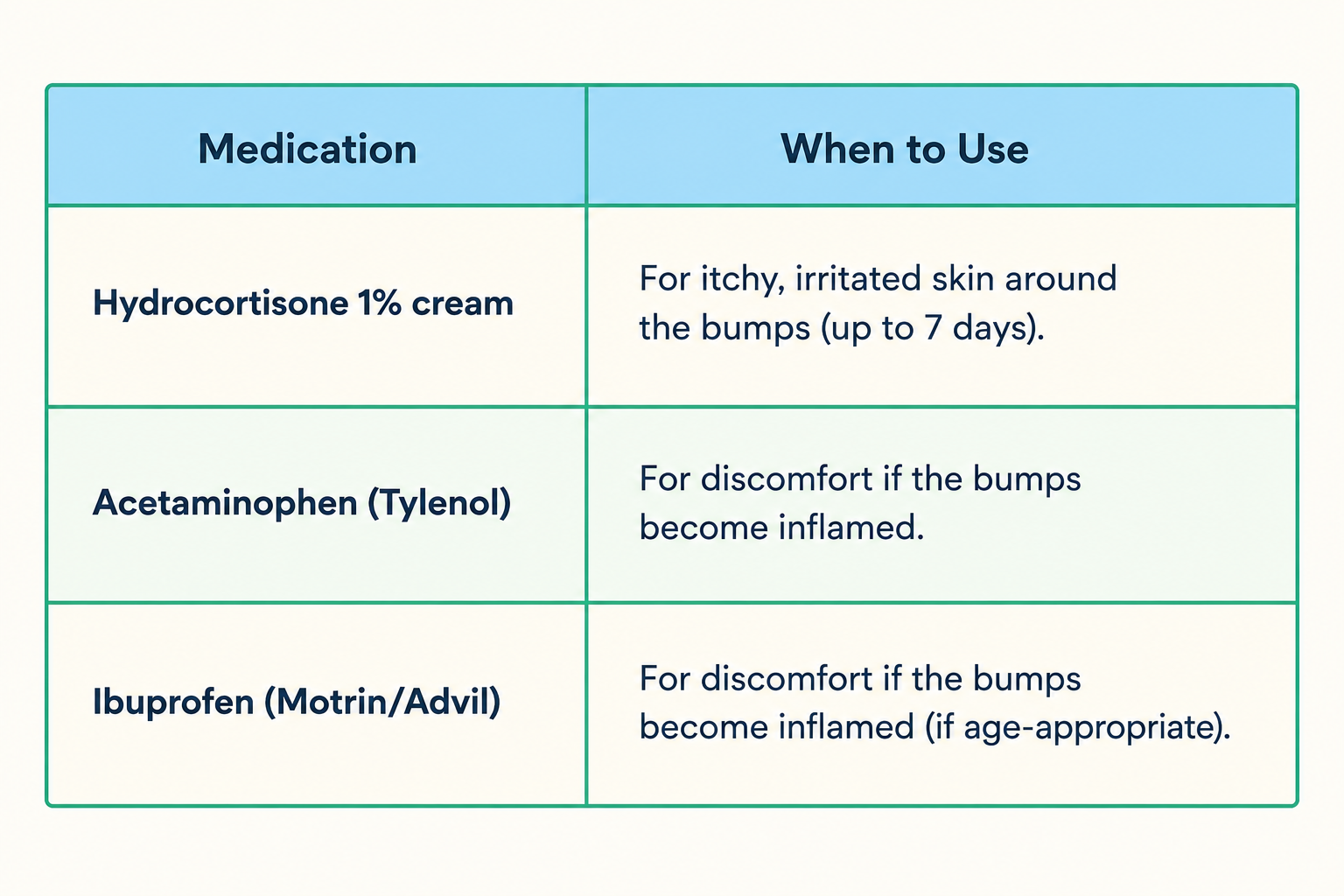
If the skin around the bumps becomes dry or itchy:
If the bumps become red or tender as they heal:
Natural remedy (optional):
Apple cider vinegar is sometimes used as a home remedy. There is no good evidence that it works, but it is generally low risk to try by dabbing a small amount onto the bumps with a cotton ball and allowing it to dry.
📱 Contact us again when:
🩺 Go to an in-person appointment when:
🚨 Seek immediate emergency care if your child is:
If your gut tells you something is wrong, don't hesitate to reach out. Need help? Reconnect with our on-demand team of medical staff available.




If you have any questions, please email us at hello@heypoppins.com or call us at (215) 559-9353.
© 2026 Poppins. All rights reserved | 2093 Philadelphia Pike #4190, Claymont, DE 19703