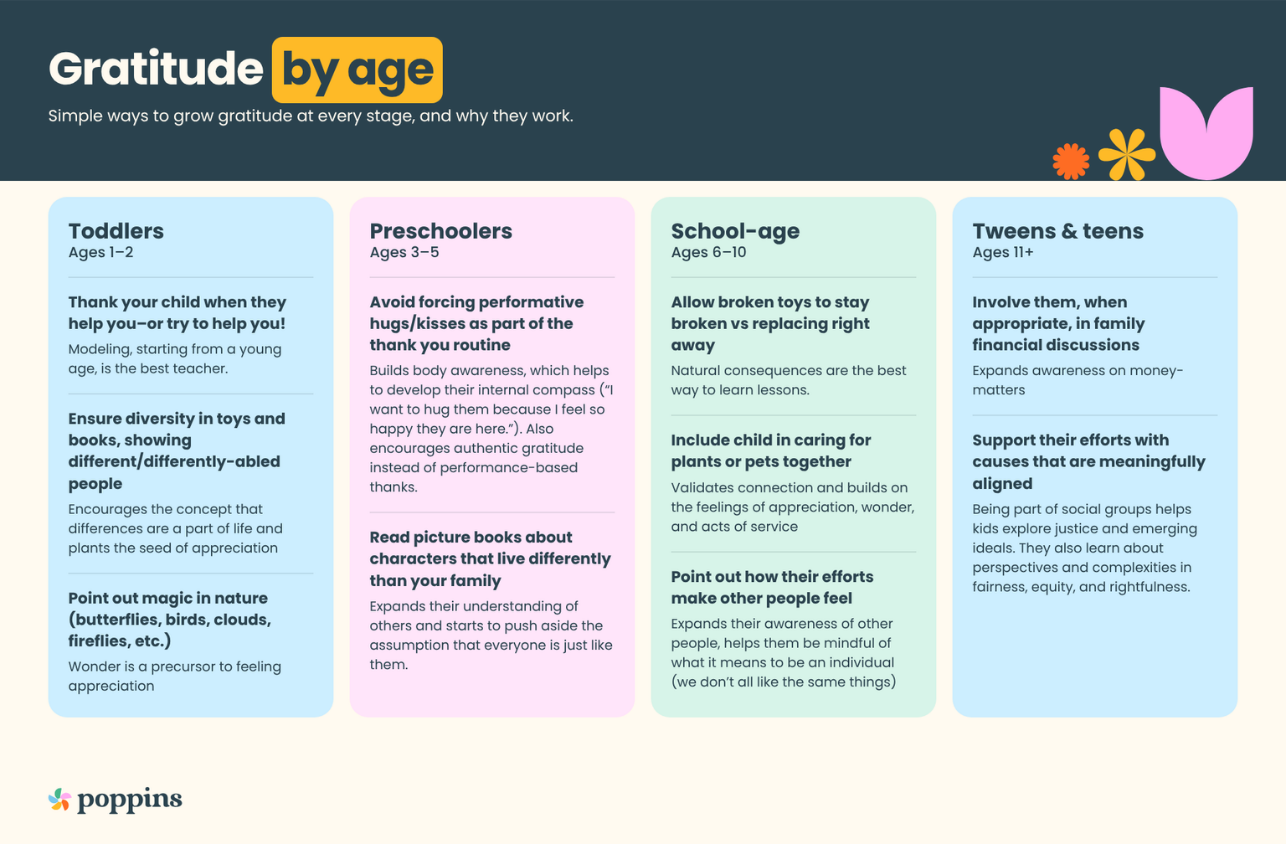
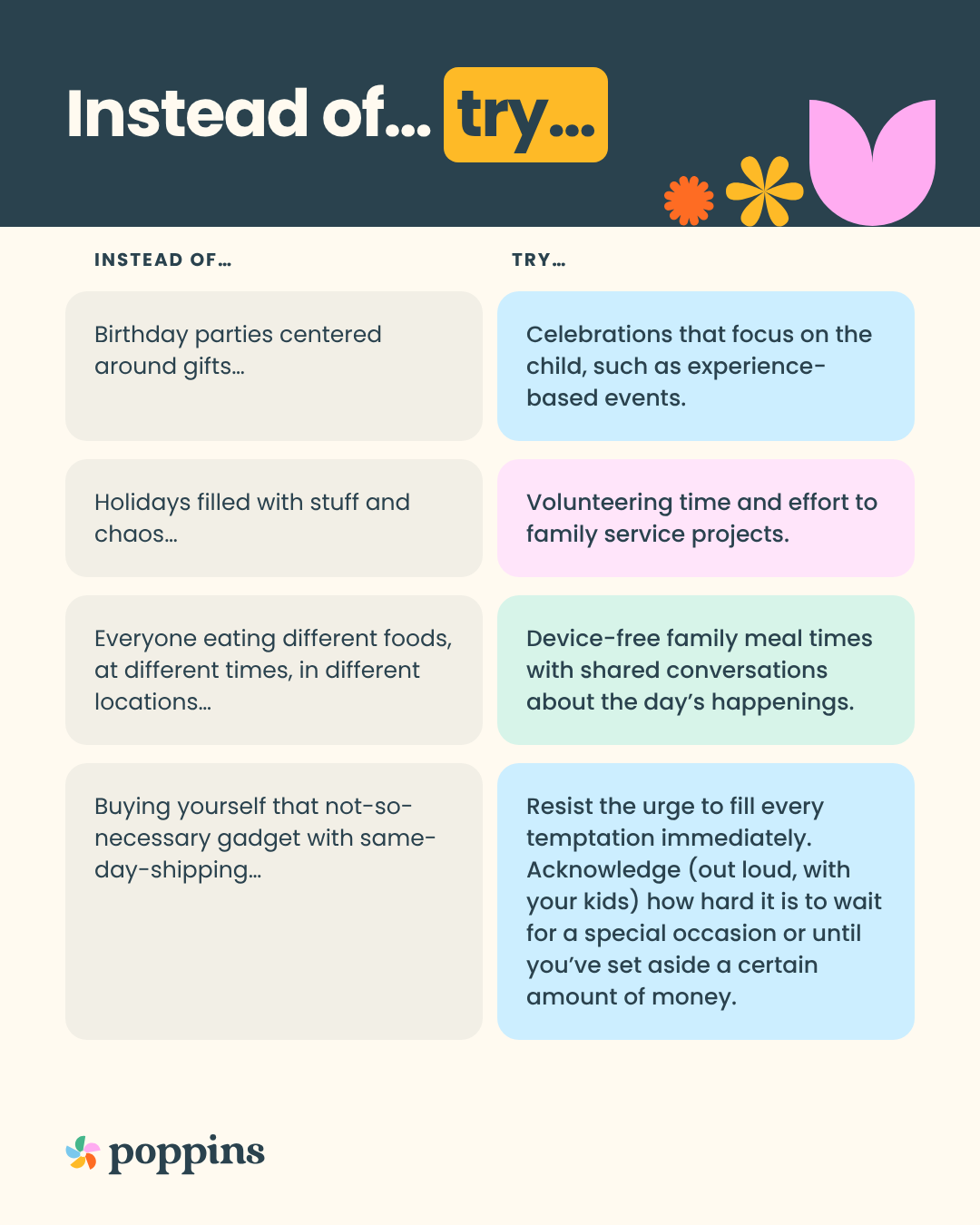
Forcing kids to say “thank you” doesn’t mean they’ll feel it. True appreciation blooms when we shift focus away from the performative aspect and on to helping kids build an internal sense of appreciation, thankfulness, and gratitude within their daily lives.
Create an Environment for Gratitude to Grow Internally
Simplify their world. Gratitude rarely grows in chaos. Too many choices → lack of wonder and appreciation.
Reduce /rotate toys
Welcome downtime/boredom
Stability builds grateful hearts. Predictable family rhythms help a child’s developing sense of self.
Device-free family meal times where each person shares what they’re thankful for
Scheduled one-on-one time between parent(s) and child/ren
Model the message.
Talk about the experiences you’re grateful for (“I’m so grateful for all the laughs I was able to share with my friend today after such a busy few weeks.” Or: “My legs are sore after that hike we did yesterday. I love it, though, because every time I go up the stairs, I’m reminded of walking up those hills with you!”)
Taking care of your belongings in a careful, non-obsessive way
Thank your kids, in a variety of ways, when they help you
When Kids Resist ✅
Remember, behaviors are messages :
Look at their environment and/or schedules for what might be adding to the overwhelm and overstimulation.
Sometimes defiance and ungratefulness means more attention from you. Could their behavior be saying that they’re looking for more time with you?
Is the pressure to perform the thank you coming from you? Is your fear of being considered a ‘bad parent’ coming through in your persistent reminders to your child? Could they show appreciation in another way, such as a high five, a drawing, or having you hold their hand while they talk to the gift-giver?
Many kids are uncomfortable being in the spot-light during present-opening time. Consider opening gifts in private or having a gift-free event.
Try at Home 🏠
What helps:
Keep connection as the priority
Simplify their world and reduce automatic purchases
Model and demonstrate appreciation
What to Say 💬
“Did you notice how big Anna’s smile was when she opened your gift? You were right when you said she would love it.”
“I really appreciate your help unloading the groceries today. My feet were hurting so badly and you saved me a couple trips.”
“Oh, I see someone in a wheelchair who’s having a hard time opening that door over there. I’m going to go help. Do you want to come with me or stay here?”
When to Check In with Your Coach 📱
Reach out to your parent coach when:
Something worked! Share the win so you and your coach can find more moments like it
You're not seeing a change with the strategies you've talked about
Your action plan isn't working for your family
You're finding it hard to stay calm yourself
New challenges come up, like bedtime battles, sibling conflict, or school refusal
Your coach works closely with the Poppins medical and sleep teams and can loop them in at any point.
You know your child best, and you don't have to figure this out alone. Unlimited messaging with your parent coach is part of your plan, so reach out anytime. Your coach is here to guide you through the rough moments and help you adjust course when something isn't working.
Need more support? Help is just a text message away.