
Aggression isn’t a behavioral problem — it’s an emotional one.
Aggression in children can feel alarming — hitting, yelling, biting, throwing, or explosive outbursts. But these behaviors aren’t signs of a “bad kid” or failed parenting.
Aggression comes from one place: frustration that has nowhere to go. When children can’t fix what isn’t working, and can’t access their tears, the frustration erupts as attacking energy.
This guide helps you understand what’s really happening in your child’s brain — and how to support them with warmth, safety, and connection.
Your child’s intense reactions aren’t defiance or manipulation.
They’re signs of an overwhelmed nervous system.
What’s really happening:
Aggression isn’t anger in the adult sense.
There’s no complex thought, no intended harm — just raw, unprocessed emotion.
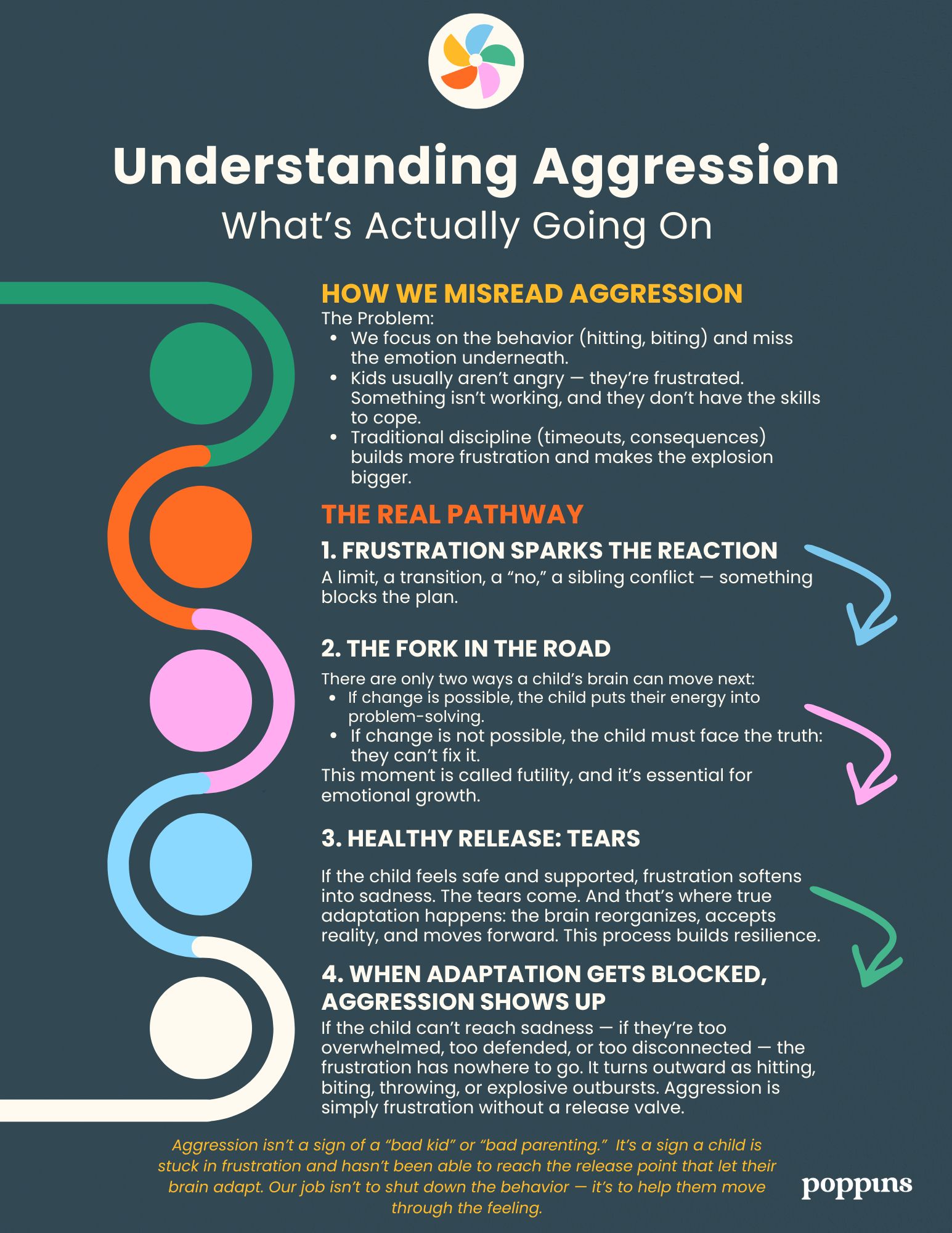
This image shows the core truth about aggression: Children aren’t “acting out” — they’re overwhelmed. Aggression begins with frustration, not anger, and conventional discipline often increases that frustration. The healthy pathway is adaptation through sadness, not punishment or control.
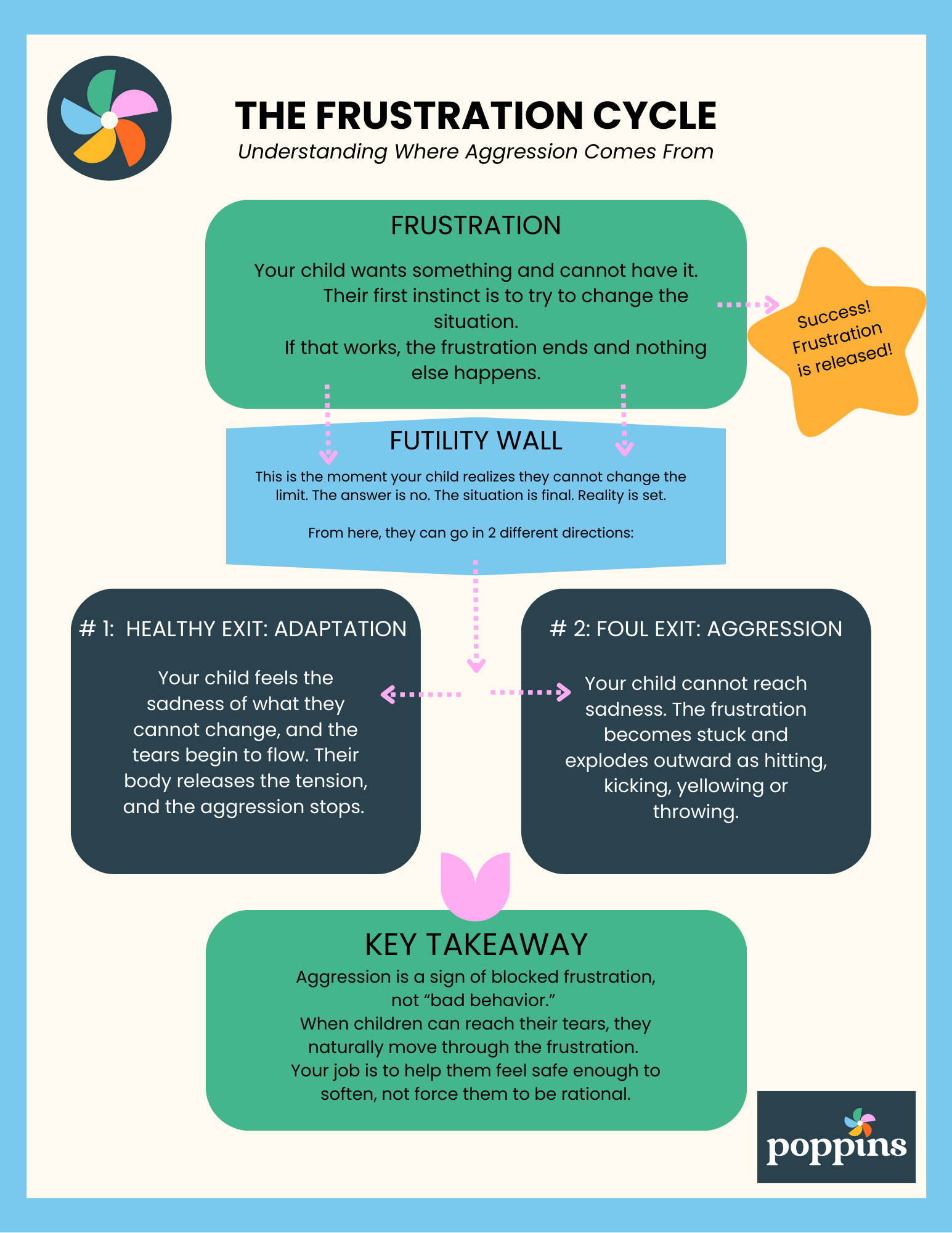
The image shows what happens in your child’s brain when something isn’t working: They first try to change the situation. If they can’t, they hit a wall of futility. If they can access tears → they adapt. If they can’t → aggression erupts. Aggression is frustration that couldn’t find its way to sadness.
Just like separation anxiety, emotional regulation develops slowly.
This is normal and temporary — not a sign of poor parenting.
Progress isn’t linear. Some children soften quickly; others take time.
Instead of trying to eliminate your child’s behavior, support the emotional process underneath it.
Ask yourself: “Is this situation simply too much for my child right now?”
This isn’t “giving in” — it’s developmentally appropriate support.
When things explode, your calm presence is the regulation they need.
Your child borrows your nervous system to come back down.
After the storm:
When tears flow, aggression fades.
Your only job is safety — not teaching or correcting.
Do:
Don’t:
These add frustration — the opposite of what your child needs.
This is when learning happens.
Help them name what wasn’t working:
Your job isn’t to fix or logic them out of feelings — it’s to guide them toward their caring feelings.
If your child never softens or cries, they may need:
Avoid situations that overwhelm them.
Predictability lowers emotional load.
Play helps release aggressive energy safely:
Play softens the emotional defenses so adaptation can happen.
Your child may need more support if:
Consider:
Your instincts matter.
Your child’s big feelings activate yours.
Take moments for yourself after hard drop-offs or emotional storms:
You don’t need to be perfect; you just need to be present.
You can’t stop frustration from happening.
You can guide it toward tears, softness, and emotional growth.
Aggression is a sign of stuck frustration, not a sign your child is broken. With safety, predictability, and warm connection, your child will grow through this stage — with a stronger capacity for empathy and resilience.
Need personalized support? Our parent coaches can guide you through aggression, frustration, and emotional development specific to your child.




If you have any questions, please email us at hello@heypoppins.com or call us at (215) 559-9353.
© 2026 Poppins. All rights reserved | 2093 Philadelphia Pike #4190, Claymont, DE 19703