
Your child isn’t plotting against you at dinner — even when it feels like it.
Between ages 2–6, kids are biologically wired to be cautious with food. Appetite slows after infancy. Control matters. Sensory systems are still developing.
What looks like defiance is usually development.
Nearly all young children go through picky phases. It’s common. It’s normal. And it doesn’t mean you’re doing anything wrong.
When we push, bribe, or insist on “just one bite,” it activates stress — and stressed kids don’t explore.
Pressure turns food into a power struggle.
Safety turns food into curiosity.
The goal isn’t to make them eat.
The goal is to make the table feel safe.
This framework changes everything.
Instead of trying to control how much your child eats, we clarify roles:
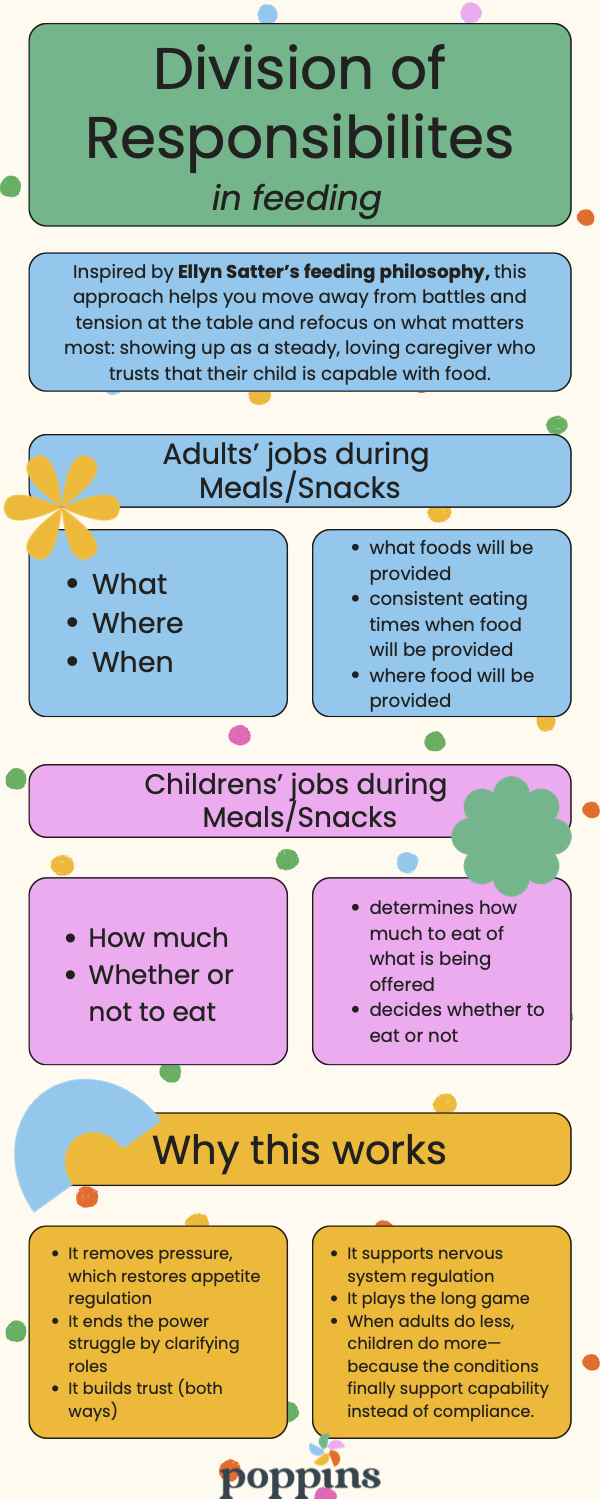
In simple terms:
Your job:
Their job:
When adults do less, children often do more — because the pressure is gone.
This approach:
Progress isn’t suddenly loving broccoli.
It’s:
It can take 10–20+ exposures for a new food to feel safe. That’s normal.
Exposure builds familiarity. Familiarity reduces fear.
Consistency matters more than intensity.
Most picky eating is developmental. Consider extra support if you notice:
You don’t have to navigate that alone.
Picky eating can trigger anxiety — especially the “Are they eating enough?” spiral.
A few reminders:
If you stay regulated, your child feels safer.
Release the pressure to “fix” dinner.
Play the long game.
Picky eating is rarely manipulation.
It’s development, autonomy, and a nervous system still learning what feels safe.
Connection first.
Consistency second.
Curiosity will follow.
Need personalized support? Our parent coaches can help you navigate picky eating with practical strategies and calm, confident guidance tailored to your child.




If you have any questions, please email us at hello@heypoppins.com or call us at (215) 559-9353.
© 2026 Poppins. All rights reserved | 2093 Philadelphia Pike #4190, Claymont, DE 19703